






 Assessment
Motivation Insight (RMP):
RMP for Adoption Resistance
-
In our digital transformation project, some employees have been labeled as “resistant.” But are they truly resistant?
-
We provided capability training, yet they still struggle to adapt. Is the problem really about capability?
-
We have a change management plan—so why do some employees still insist on using the old system?

37%
of managers underestimate the impact of change. (WalkMe, 2024)
50%
of “quiet quitters” resist change silently. (Gallup, 2022)
70%
of change initiatives fail. (McKinsey)
-
 20-30 Mins
-
 128 Questions
-
 50+ Participants
-
 Motivation Insight (RMP)
 Without Motivation Analysis
Labeling employees as “resistant”
Diagnosing resistance as a capability issue
One-size-fits-all change messaging
Forcing change through fear or pressure
 With Motivation Analysis
Understanding the root cause of resistance and choosing the right approach
Analyzing the alignment between motivation and change
Personalized communication based on motivational drivers
Adoption strategies that appeal to intrinsic motivation


Resistance is often misdiagnosed as a cognitive problem. In reality, it reflects gaps in clarity, support, and experience
-Whatfix Research
Organizations that adopt the right approach achieve 72% higher adoption rates.
RMP for Adoption Resistance — Product Overview

RMP for Adoption Resistance
Product Name
Motivation Insight (ASS)
Survey Category
RMP
Partner
MOTG (Primary) | RESC | AIA | LERG | PERC | LEC
Challenge
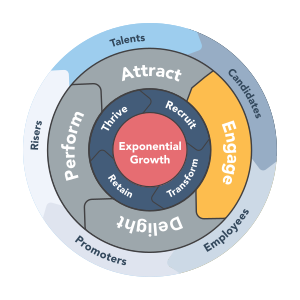
ENGAGE
Flywheel
Organizations undergoing change, Digital transformation teams
Target Audience
128 questions
Number of Questions
20–30 minutes
Completion Time
50+
Minimum Participants
RMP 16 Motivators
Methodology
Online Platform
Delivery Method
Turkish / English
Language Options
Individual and Team Motivation Profiles + Resistance Risk Map
Reporting
RMP Global Norm Group
Benchmark
Specialized analysis based on the type of change (digital, process, culture)
Customization
Assessment + Resistance Profile Report + Adoption Strategy Guide
Package Includes
Project Manager
Included
RMP Team Motivation Training (PTP), Crucial Influence (PTP)
Optional Services
Related Success Programme Solutions
 Related Assessments
RMP for Culture Analysis
RMP for Team Efficiency
RMP for Values Alignment
Psychological Safety Survey
Employee Engagement Survey
Change Readiness Assessment
Show More
Related Training & Consulting
Crucial Conversations® for Mastering Dialogue (PTP)
Crucial Influence (PTP)
RMP Team Motivation Training (PTP)
The Five Behaviours (PTP)
Team Building Workshop (CON)
Leadership Coaching (COA)
Show More