



Building Human Capital Strategy
“The Strategy Is Ready — But Is the Organization Ready?”
Strategy meetings go well, documents are prepared, presentations are impressive — yet nothing changes in the field. This is because the most critical layer behind the strategy is missing: a human capital architecture that identifies the right talent, places them in the right roles, and develops them over the long term. This consultancy ensures that your strategy is supported by a functioning human infrastructure.
Overview
 Persona
 Project Duration
 Min. Day
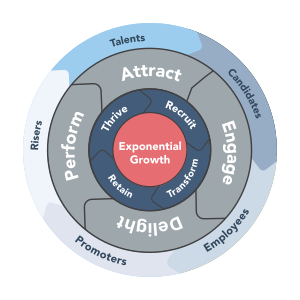
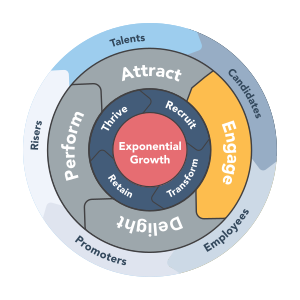
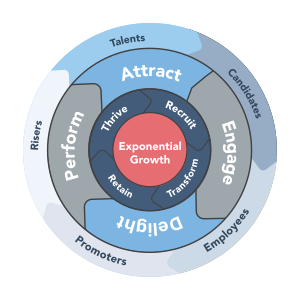
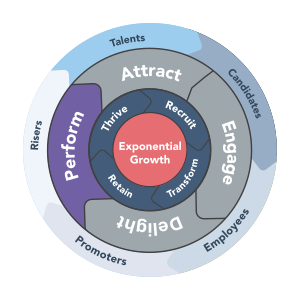
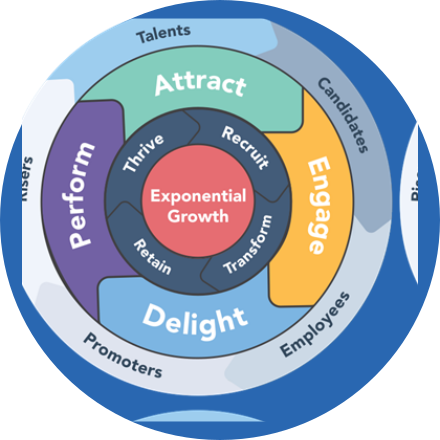
 Flywheel
 Partner

What Is It?
Most organizations build good strategies — but fail to build the necessary human infrastructure behind them. Building Human Capital Strategy is a consulting program that places the right people in the right roles and develops them for long-term success.
We map who can do what, identify capability gaps, and design the pathway to close those gaps together. The result is not just a report — it is a living system that informs every decision from recruitment and promotion to succession planning and development pathways.

We answer three key questions:
Who do we currently have, and what capabilities do they possess? Who do we need to execute our strategy successfully? How do we close the gap between the two?

SWOT — Typical Organizational Profile
This is the typical SWOT profile of organizations that do not have a human capital strategy.
STRENGTHS
 Internal talent exists, but it has not been systematically mapped.
Senior management appears to support investment in people in principle.
The recruitment process functions, but lacks strategic focus.
Basic HR metrics are being tracked.
Internal talent exists, but it has not been systematically mapped.
Senior management appears to support investment in people in principle.
The recruitment process functions, but lacks strategic focus.
Basic HR metrics are being tracked.
WEAKNESSES
 There is no succession plan for critical roles.
The competency framework is not aligned with the business strategy.
Hiring decisions are still partially based on intuition rather than data.
High-potential employees are leaving the organization.
There is no succession plan for critical roles.
The competency framework is not aligned with the business strategy.
Hiring decisions are still partially based on intuition rather than data.
High-potential employees are leaving the organization.
OPPORTUNITIES
 AI tools have made human capital management more scalable.
AI adoption requires new role definitions.
AI has reshuffled the deck — every company is effectively starting from the same point.
Competitors are facing the same talent bottleneck.
AI tools have made human capital management more scalable.
AI adoption requires new role definitions.
AI has reshuffled the deck — every company is effectively starting from the same point.
Competitors are facing the same talent bottleneck.
THREATS
 Loss of critical talent can bring strategic projects and future company plans to a standstill.
The rules of talent management are being rewritten — AI is transforming roles and changing expectations from people.
Reactive hiring costs are 3–5 times higher than proactive workforce planning.
In times of economic uncertainty, investment in people is often one of the first budget items to be cut.
Loss of critical talent can bring strategic projects and future company plans to a standstill.
The rules of talent management are being rewritten — AI is transforming roles and changing expectations from people.
Reactive hiring costs are 3–5 times higher than proactive workforce planning.
In times of economic uncertainty, investment in people is often one of the first budget items to be cut.
Who It’s For / Who It’s Not For
 Companies with strategic growth plans but without a defined human infrastructure to support them
Organizations experiencing frequent turnover in critical positions
CHROs who want to move talent management from intuition to a structured system
Leaders who want to map their human capital before undergoing AI transformation
Mid-to-large organizations beginning to take succession planning seriously
Companies with strategic growth plans but without a defined human infrastructure to support them
Organizations experiencing frequent turnover in critical positions
CHROs who want to move talent management from intuition to a structured system
Leaders who want to map their human capital before undergoing AI transformation
Mid-to-large organizations beginning to take succession planning seriously
 Leaders seeking quick results or a short-term solution within 2–3 months
Companies that consider HR process digitalization alone to be sufficient
Projects without sponsorship from senior leadership or the CEO
Organizations with fewer than 50 employees
Companies forced to postpone investment in people due to budget pressure
Leadership teams that continue to view human capital as a cost rather than a strategic asset
Leaders seeking quick results or a short-term solution within 2–3 months
Companies that consider HR process digitalization alone to be sufficient
Projects without sponsorship from senior leadership or the CEO
Organizations with fewer than 50 employees
Companies forced to postpone investment in people due to budget pressure
Leadership teams that continue to view human capital as a cost rather than a strategic asset
What Do You Gain?
Talent Map and Gap Analysis
Role Architecture and Competency–Motivation Profiles
Succession pipeline
Individual and Organizational Development Roadmap
Integrated Human Capital System
The Number

91%

2x
75+%
Value Timeline
Analyze
Design
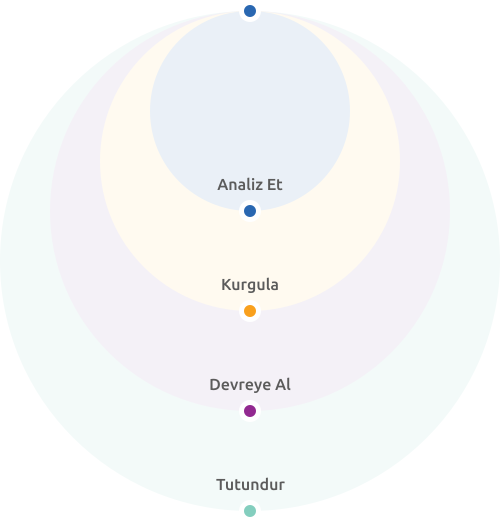
Implement
Sustain
Working Model





Understand the Current State
Design the System
Put It into Action
Ensure Long-Term Continuity
Understand the Current State
Design the System
Put It into Action
Ensure Long-Term Continuity
How We Work

Weekly Check-ins — No Surprises
A weekly progress meeting is held with the project sponsor and the leadership team. Findings, decisions, and next steps are shared transparently — there are no surprises.

We Build Together — We Don’t Deliver and Leave
All work is carried out side by side with the client team. Role profiles, gap analyses, and development plans are co-designed; this is not a model where the consultant delivers and the client simply approves.

When Issues Arise — We Address Them Immediately
If a critical finding emerges, we do not wait for the next meeting. Real-time communication and rapid decision-making set the pace of the project.


Field Support — Ownership Remains with You
We do not simply deliver a strategy document and step away. We remain engaged during implementation. However, you make the decisions and run the system — our goal is to transfer ownership to you quickly.

Knowledge Transfer — No Dependency
We do not practice traditional consulting where advice is given and the consultant leaves. Instead, we build the knowledge, tools, and approaches with your team so they become fully capable. By the end of the project, you should not depend on us.

Technology Recommendations — Only What Works
During the consulting process, we recommend only the tools we have personally implemented and proven effective in practice.

Common Objections


“We already have an HR department; we can handle this ourselves.”
 Answer
“Now is not the right time; we have more urgent priorities.”
Answer
“16–24 weeks is too long; we cannot wait for results.”
Answer
“Our team does not have time to dedicate to this project right now.”
Answer
“Can we shorten the project by skipping the diagnosis phase? We already know the problem.”
Answer

Our Approach

Data comes first, intuition second

Competence alone is not enough

Build systems, not projects
Prerequisites For Success
This project delivers results only when the following conditions are met.

Executive Sponsorship

Goal Alignment

Openness to Feedback

Marathon Mindset
Related Solutions
 ASS
ASS
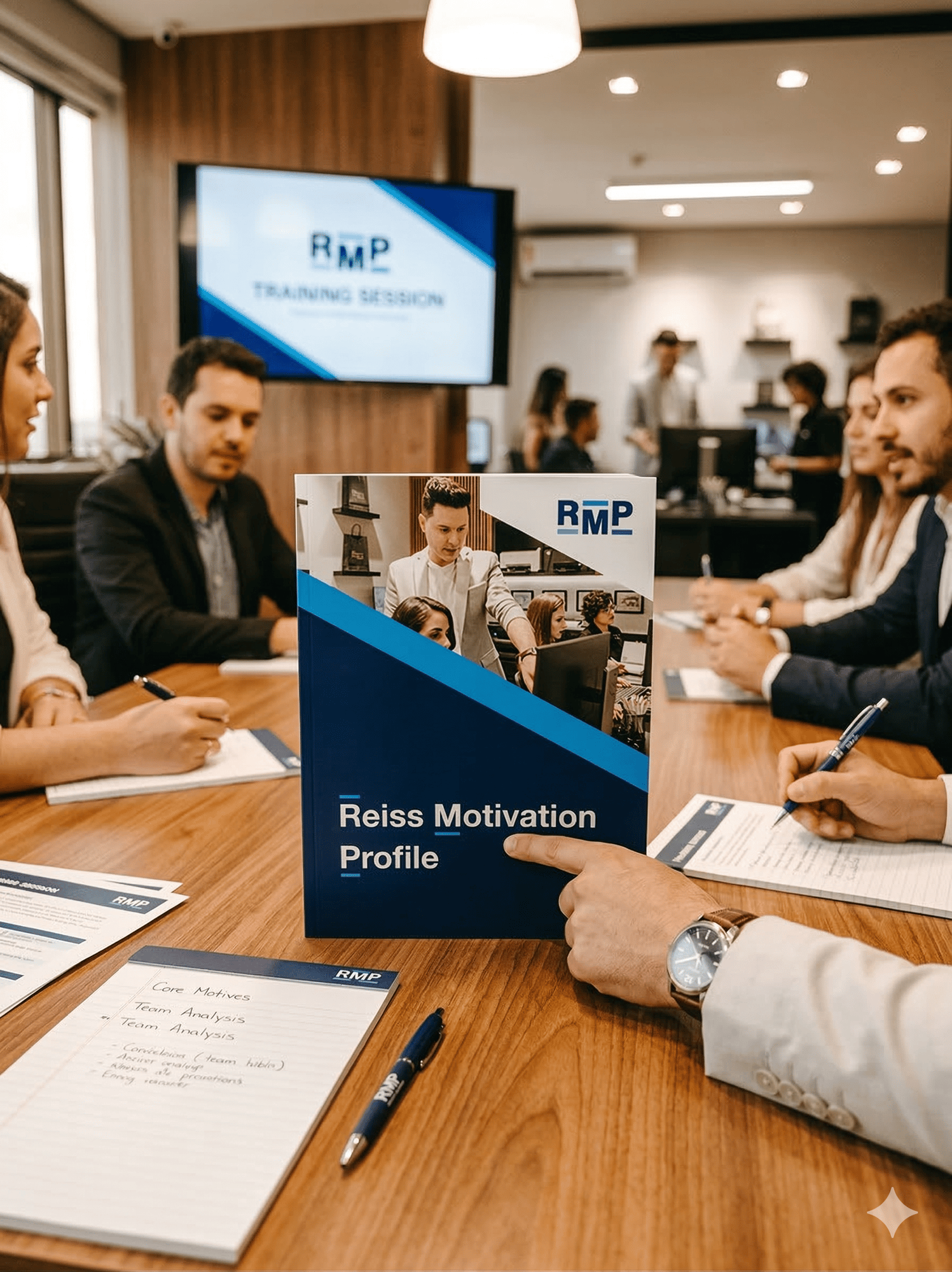
RMP Full Assessment
An individual profile measuring 19 motivational factors. Serves as a core input for role alignment and development planning.
 ASS
ASS
Leadership Assessment
Measures leadership potential and readiness level. Provides critical data for building the succession pipeline.
 COA
COA
Strategic Thinking & Decision Making
One-on-one coaching for senior executives. Activated as an accelerator after leadership gaps are identified.
 PTP
PTP
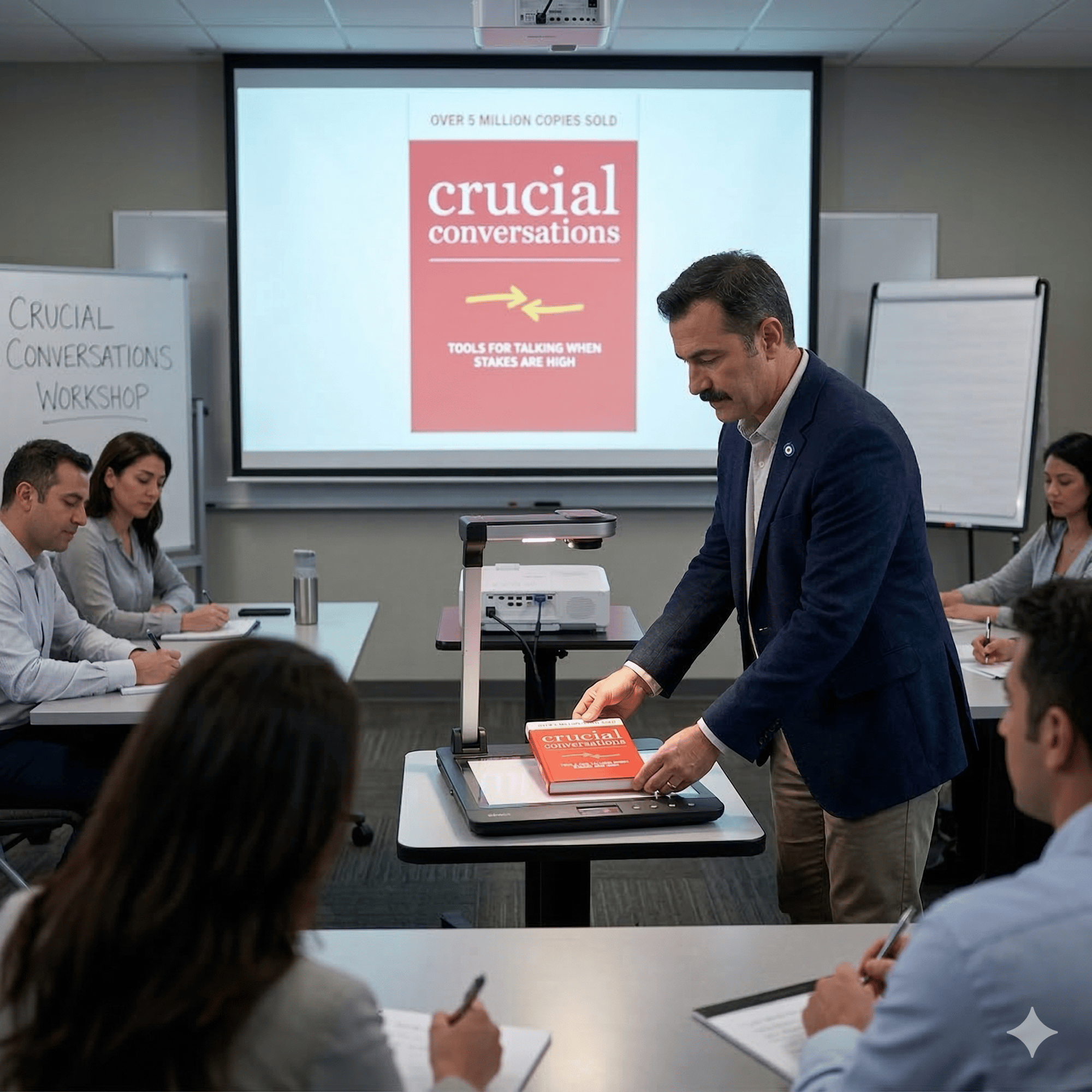
Crucial Conversations
Develops essential dialogue skills within the leadership team to ensure the human capital system functions effectively.
 PTP
PTP
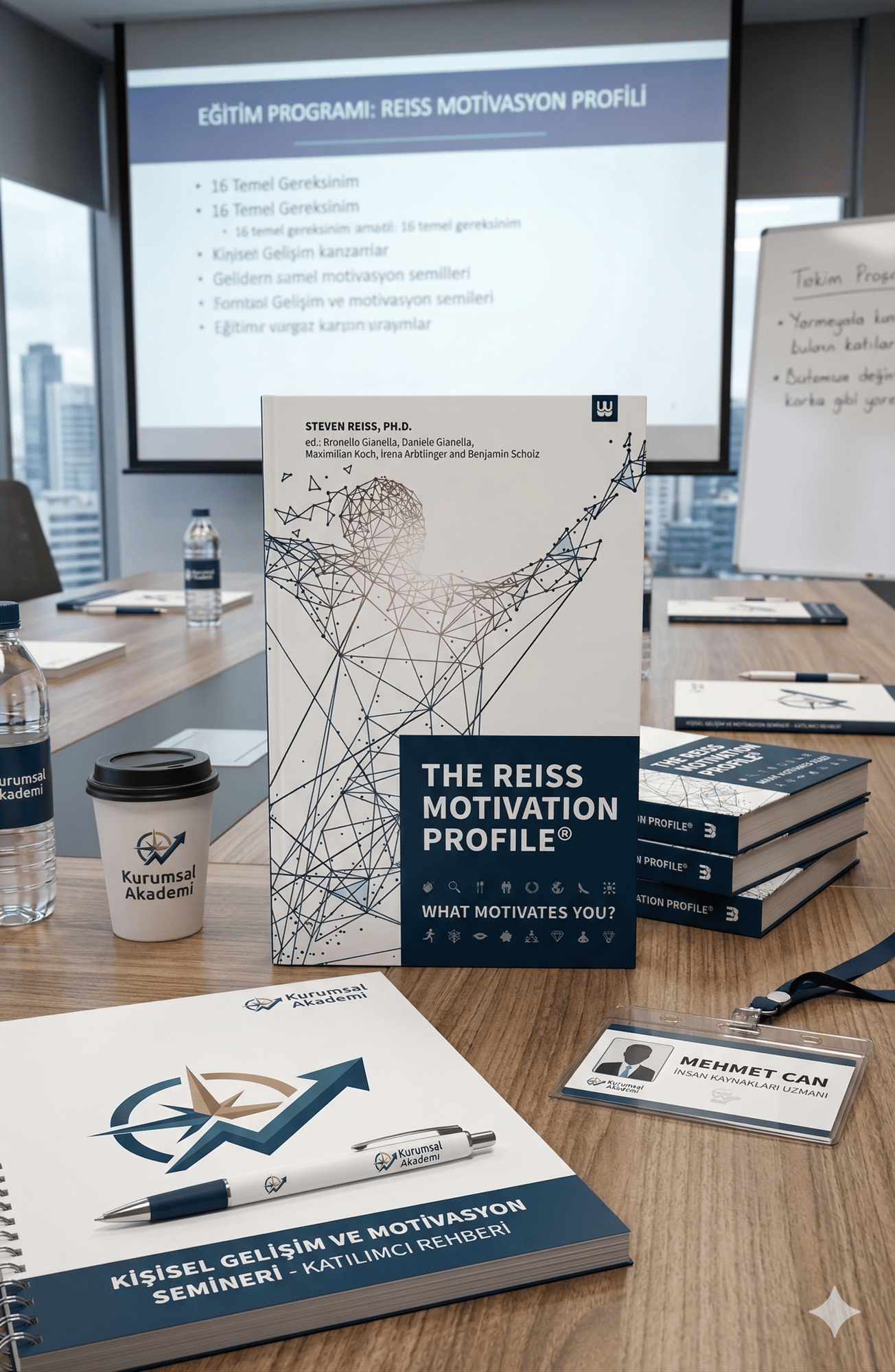
RMP Mastery for Talent Managers
A specialist program enabling HR and talent teams to independently interpret and use RMP data.
 CON
CON
Building Competency Framework
A complementary program to Human Capital Strategy. Deepens the competency framework and motivation model.
 ASS
ASS
Competency Gap Analysis
Compares current competency levels with role requirements and identifies development priorities based on data.
 ASS
ASS
Leadership Competency Profile
Creates competency-based profiles for leadership roles and serves as a reference framework for hiring and promotion decisions.
 ASS
ASS
Leadership Readiness Assessment
Measures readiness for leadership positions and provides critical data to support the succession pipeline.
Overview

General Overview
 Target Persona
 Project Duration
 Minimum Consulting
 Language
Hizmete Dahil Olanlar
-
 In-Person
 -
Live Online
-
Hybrid
-
Pre-AnalysisStrategic Planning Documents
-
AssessmentRMP + Leadership Assessment
-
Project Management Platform
-
Executive/Sponsor Meetings
-
Reporting
-
Supporting Resources
-
Workshop
-
 E-LearningOpsiyonel
 -
Micro LearningOpsiyonel
-
Implementation SupportOpsiyonel
 Recommended Training
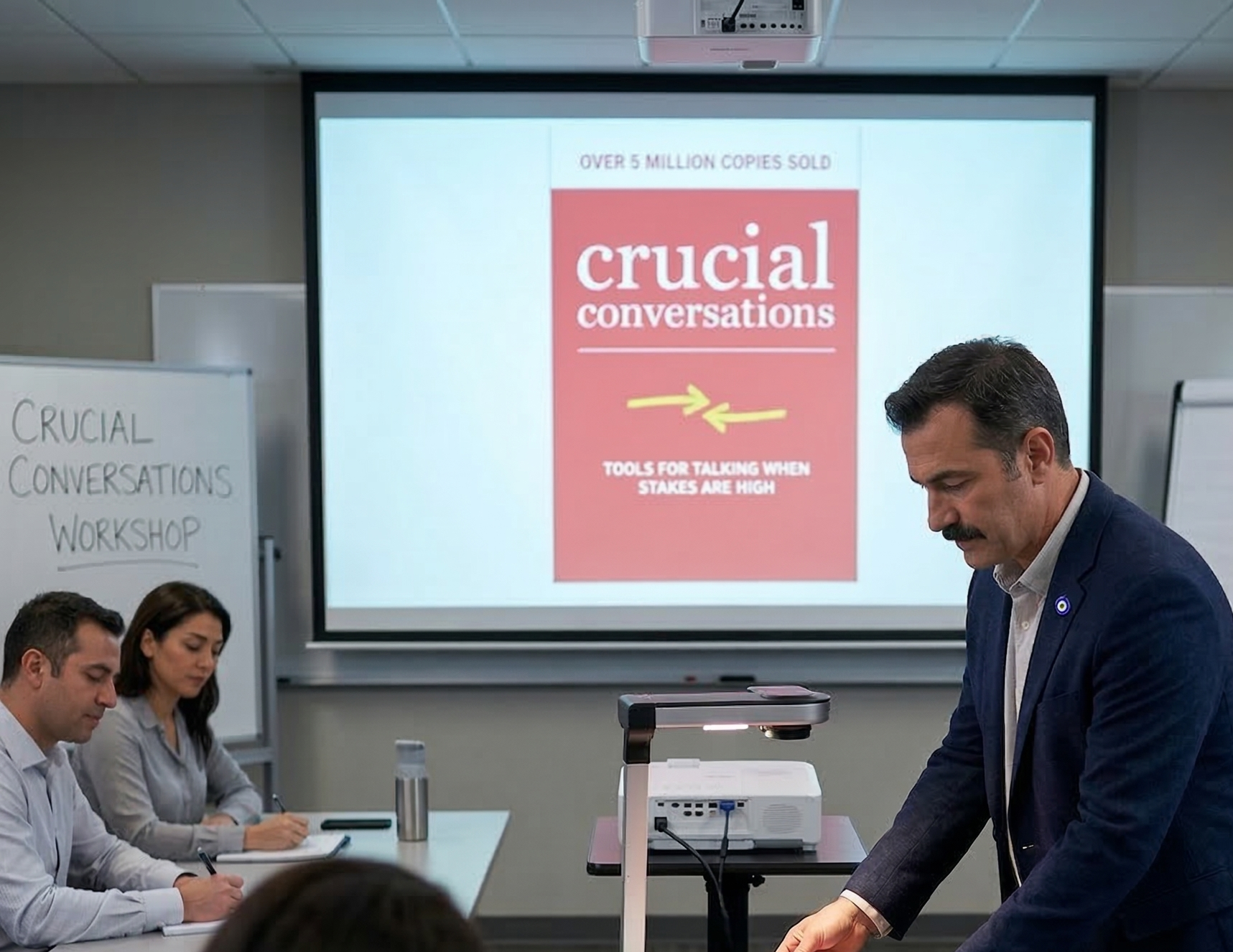
Crucial Conversations for Mastering Dialogue
 Recommended Training
RMP Motivation Training — Who am I