







Customer Service Design
In most companies, customer service is managed as a cost center. That is why it operates that way. The same problems repeat. Contact volume grows. The team expands. Yet customer loss does not stop.
You see churn in reports — but you do not see where the loss begins.
As a result, customer loss happens without your awareness. Customers do not complain; they simply leave. And this loss does not enter anyone’s agenda until the next sales cycle. The problem is not service performance — it is a lack of design. Even a well-managed service cannot stop revenue loss if it is poorly designed. More dangerously, a well-functioning support team can hide this problem — no alarms are triggered, and losses grow silently. A properly designed service does not just resolve issues. It manages the customer lifecycle, anticipates churn, and systematically generates revenue from existing customers. Customer satisfaction is not the responsibility of the service team alone — it is the performance of the entire organization. And that performance is determined by design.
 Persona
 Project Duration
 Minimum Consulting
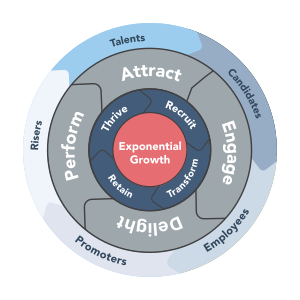
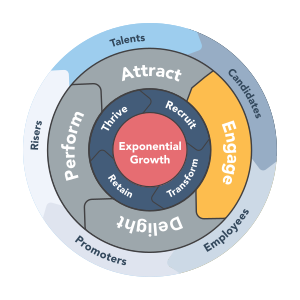
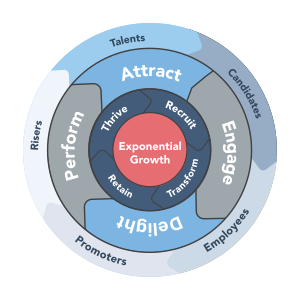
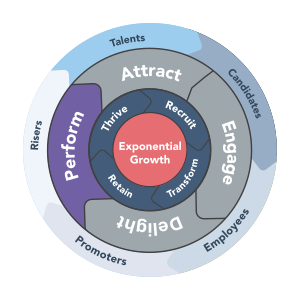
 Flywheel
 Partner
What Is It?
Customer Service Design; is the process of transforming customer service from a demand-handling operation into a growth system that reduces churn and generates revenue.
In this approach, customer service is not treated as a support function but as the most critical touchpoint of the customer experience. The goal is not to resolve more requests, but to eliminate recurring problems, optimize interactions, and turn customer touchpoints into value-creating moments.

As a result, the organization retains more customers with fewer interactions, increases customer value, and directly links the service function to commercial performance.

SWOT — Typical Organizational Profile
This structure reflects the typical profile of organizations that have customer service but have not systematically designed customer management.
STRENGTHS
 The existing customer base is ready for growth — the lowest-cost revenue source is already within.
Service interactions generate high-frequency data — each interaction provides direct insights into customer behavior and expectations.
The service operation touches the entire customer journey — from onboarding to renewal.
The current team has the deepest understanding of customer reality — problems, objections, and friction points are most visible here.
The existing customer base is ready for growth — the lowest-cost revenue source is already within.
Service interactions generate high-frequency data — each interaction provides direct insights into customer behavior and expectations.
The service operation touches the entire customer journey — from onboarding to renewal.
The current team has the deepest understanding of customer reality — problems, objections, and friction points are most visible here.
WEAKNESSES
 Service operates reactively and reproduces problems — issues are resolved but not eliminated.
Churn is invisible and detected late — customers leave without complaints.
Service performance is measured with operational metrics — speed and resolution rate, not revenue impact.
There is a disconnect between service, sales, and operations — ownership of customer experience is unclear.
Service operates reactively and reproduces problems — issues are resolved but not eliminated.
Churn is invisible and detected late — customers leave without complaints.
Service performance is measured with operational metrics — speed and resolution rate, not revenue impact.
There is a disconnect between service, sales, and operations — ownership of customer experience is unclear.
OPPORTUNITIES
 Costs are reduced by eliminating recurring problems — contact volume decreases, and team efficiency improves.
Revenue is protected through early churn detection — losses are anticipated and become actionable.
Service interactions are converted into revenue opportunities — upsell and cross-sell become systematic.
The customer lifecycle can be managed end-to-end — service evolves from a support function into a growth engine.
Costs are reduced by eliminating recurring problems — contact volume decreases, and team efficiency improves.
Revenue is protected through early churn detection — losses are anticipated and become actionable.
Service interactions are converted into revenue opportunities — upsell and cross-sell become systematic.
The customer lifecycle can be managed end-to-end — service evolves from a support function into a growth engine.
THREATS
 Strong support can mask underlying problems — everything appears to function, while the system continues to generate losses.
Competitors who systematize the experience create differentiation — those who design service win, while others are pushed into price competition.
Increasing contact volume drives uncontrolled cost growth — teams expand, but efficiency does not improve, eroding margins.
Invisible churn does not simply hinder growth — it silently destroys it.
Strong support can mask underlying problems — everything appears to function, while the system continues to generate losses.
Competitors who systematize the experience create differentiation — those who design service win, while others are pushed into price competition.
Increasing contact volume drives uncontrolled cost growth — teams expand, but efficiency does not improve, eroding margins.
Invisible churn does not simply hinder growth — it silently destroys it.
Who Is It For?
 Organizations with a customer service team but unable to explain why it consistently generates costs
Companies that repeatedly resolve the same customer issues but have not yet addressed this as a design problem
Businesses that only recognize customer loss after it occurs, and cannot predict or manage churn
Organizations missing revenue opportunities from existing customers due to a disconnect between service and sales
Companies relying on new customer acquisition for growth, without fully leveraging the value of their existing customer base
CROs who aim to manage customer service not as an operational function, but as a direct revenue-generating system
Organizations with a customer service team but unable to explain why it consistently generates costs
Companies that repeatedly resolve the same customer issues but have not yet addressed this as a design problem
Businesses that only recognize customer loss after it occurs, and cannot predict or manage churn
Organizations missing revenue opportunities from existing customers due to a disconnect between service and sales
Companies relying on new customer acquisition for growth, without fully leveraging the value of their existing customer base
CROs who aim to manage customer service not as an operational function, but as a direct revenue-generating system
 Organizations without an established customer service function or those at a very early stage
Companies that see tools (CRM, chatbots, ticketing systems) as the primary solution
Organizations seeking to improve service quality but not ready to change processes, roles, or structure
Companies that do not treat customer service as a strategic priority or lack executive ownership
Organizations that do not prioritize growth from existing customers and rely solely on new customer acquisition
Companies looking for short-term fixes instead of building a sustainable system — this approach requires patience and discipline, not quick wins
Organizations without an established customer service function or those at a very early stage
Companies that see tools (CRM, chatbots, ticketing systems) as the primary solution
Organizations seeking to improve service quality but not ready to change processes, roles, or structure
Companies that do not treat customer service as a strategic priority or lack executive ownership
Organizations that do not prioritize growth from existing customers and rely solely on new customer acquisition
Companies looking for short-term fixes instead of building a sustainable system — this approach requires patience and discipline, not quick wins
What Do You Gain?
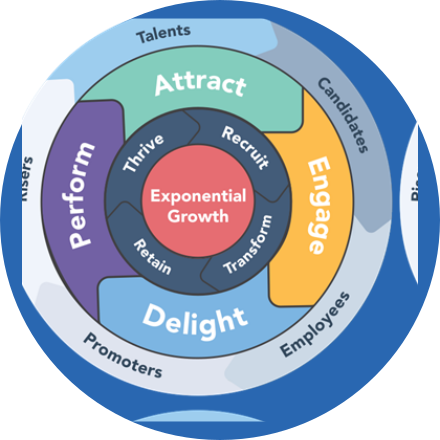
Recurring Problems Are Eliminated
Customer Churn Is Brought Under Control
The Customer Lifecycle Is Managed
Customer Effort Decreases, Retention Increases
Service Generates Revenue
Service Determines Growth
The Numbers

80% / 8%

70%

5% / 95%
Value Timeline

Working Model
Service data, ticket history, and customer interactions are examined

The target service model is structured.

The new structure is deployed in collaboration with teams.

Performance dashboards are established.

Service data, ticket history, and customer interactions are examined

The target service model is structured.

The new structure is deployed in collaboration with teams.

Performance dashboards are established.
How We Work

We Start with Data
From the outset, we rely on data—not assumptions. We do not begin with discussions until ticket history, interaction analysis, and churn patterns have been thoroughly examined. We start once the real picture is clear.

We Work in the Field, Not Just Deliver Reports
We do not simply present a design and step back. We embed ourselves in operations, build the system together with the team, and validate each step in practice.

We Progress with a Weekly Rhythm
The process is managed in sprints. Each week delivers clear outputs and measurable progress. Decision points are defined in advance—there are no surprises.

We Keep Stakeholders Engaged
Service, sales, and operations are involved simultaneously throughout the process. Alignment is not achieved through meetings, but through working together.

We Design Only What Will Be Used
We do not create theoretical models. We build structures that live in daily operations. Any process not adopted by the team does not become part of the system.

We Leave a Self-Sustaining System
When the engagement ends, the team is able to run the system independently. Our goal is not to create ongoing dependency on external support.
Common Objections

“Our service is good—we solve problems.”
“We use a CRM—we manage customer requests.”
“Our industry is different.”
“Our customer satisfaction is already high.”

“Our service is good—we solve problems.”
“We use a CRM—we manage customer requests.”
“Our industry is different.”
“Our customer satisfaction is already high.”
Our Approach

We measure the problem — we do not assume.

We do not advise — we build together.

We distinguish between good support and good service.

We link service directly to performance.
Trusted Technology and Consulting Partners

Prerequisites For Success
This consulting engagement is effective only when the following conditions are met:

Executive Ownership

Goal Alignment

Confronting Reality

Prioritization Discipline
Related Solutions
 ASS
ASS
NPS Survey
Measures customer loyalty; used for pre- and post-service design comparison.
 ASS
ASS
Customer Effort Score (CES)
Measures how much effort customers expend during service interactions; a key input for touchpoint optimization.
 ASS
ASS
CSAT Survey
Measures interaction-based customer satisfaction; clarifies which touchpoints require redesign.
 ASS
ASS
Customer Health Score
Identifies churn risk in advance; establishes the measurement infrastructure for churn management.
 PTP
PTP
Customer Service Selling Skills (ASLAN)
Prepares service teams for upsell and cross-sell conversations; strengthens the human dimension of revenue integration.
.jpg?width=600&height=400&name=depositphotos_313446154-stock-photo-group-of-designers-brainstorming-at%20(1).jpg) ENA
ENA
Customer Success Enablement
Equips contact center teams with the skills to convert service interactions into sales opportunities.
 PTP
PTP
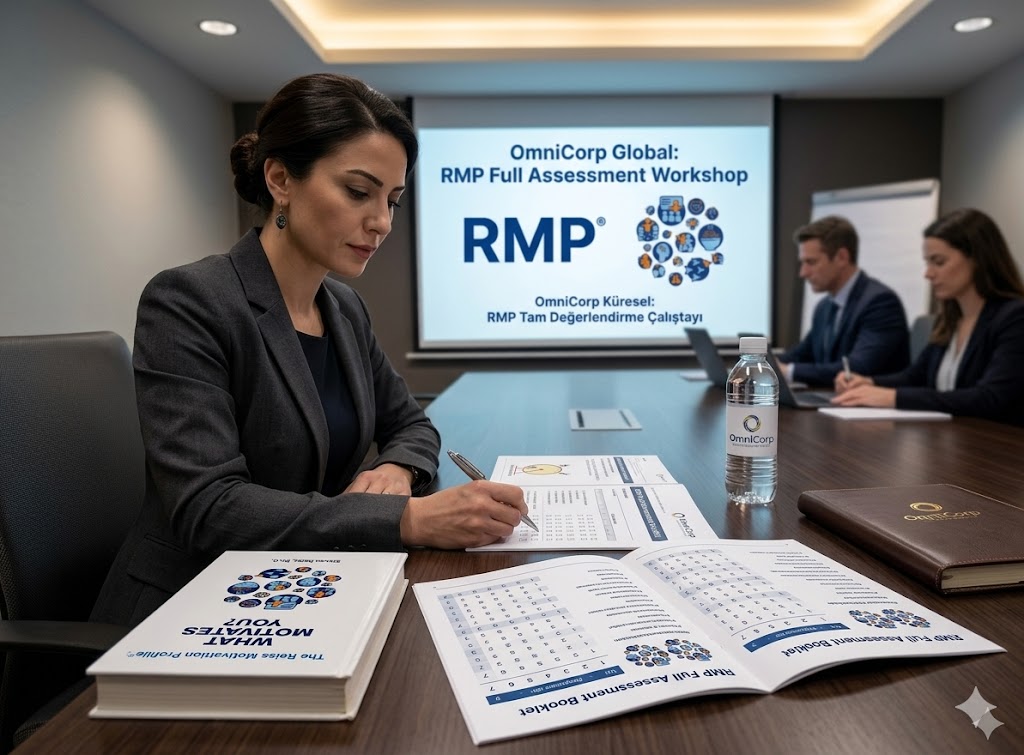
RMP Motivation Training — Who am I
Provides enablement support to transform the service function into a customer success-driven structure.
 SAS
SAS
Smart CRM Solution
Reveals the motivation profiles of service teams; enhances team management and performance.
 IMP
IMP
Smart CRM Solution Implementation
Establishes a CRM infrastructure to manage service processes on a single platform and ensures end-to-end visibility of customer data.
 PTP
PTP
Contact Center Sales Training (ASLAN)
Equips contact center teams with the skills to convert service interactions into sales opportunities.
Overview

General Overview
 Target Audience
 Project Duration
 Minimum Consulting
 Language
What's Included?
-
 On-siteRecommended
 -
Live Remote
-
Hybrid
-
Pre-AnalysisCX Journey Maps
-
AssessmentCX Assessment · NPS Analysis
-
Project Management PlatformAvailable
-
Executive / Sponsor MeetingsAvailable
-
ReportingAvailable
-
Supporting ResourcesAvailable
-
 WorkshopOpsiyonel
 -
E-LearningOptional
-
Micro LearningOptional
-
Implementation SupportAvailable
 Recommended Training
Crucial Learning - Crucial Conversations
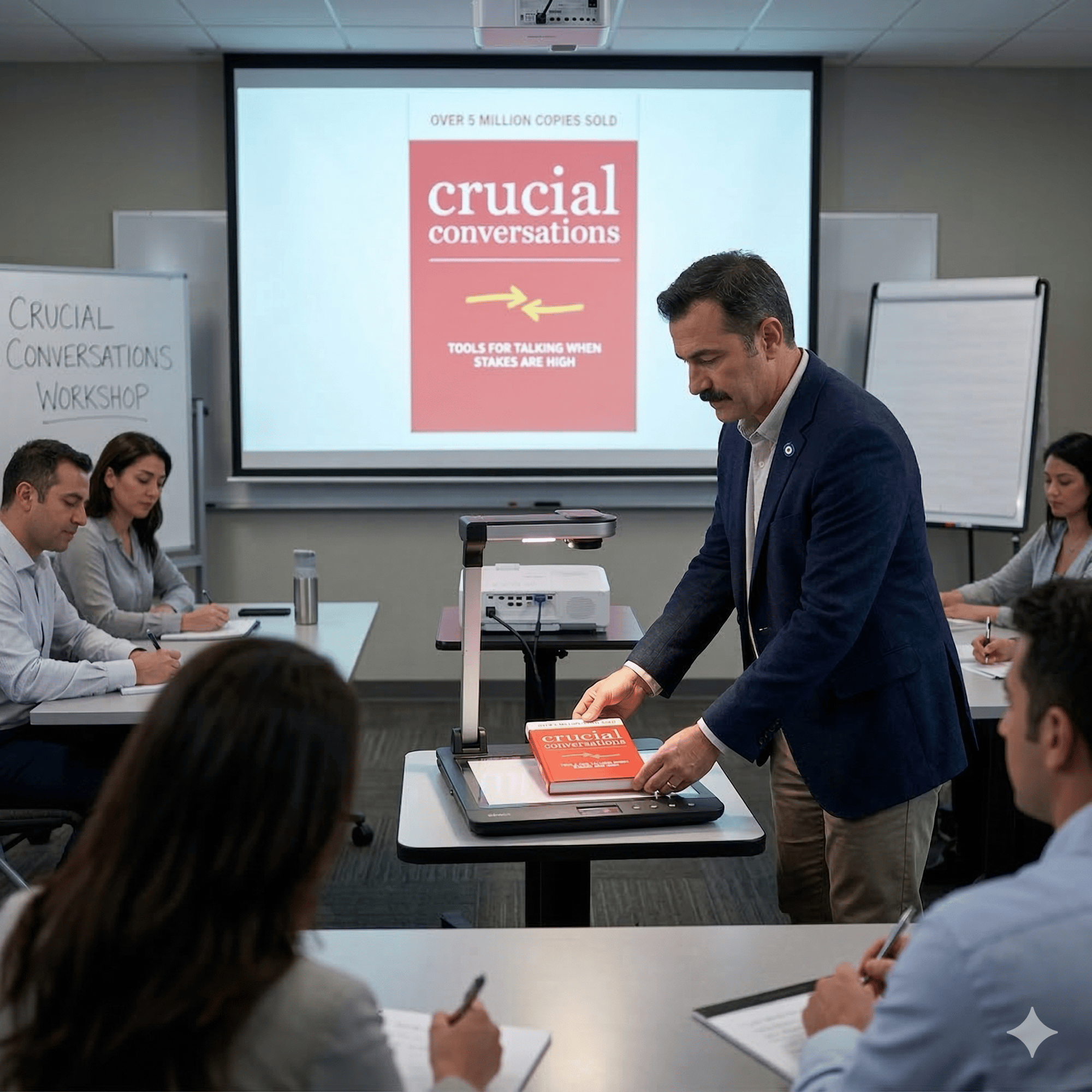 Recommended Training
ASLAN Customer Service Selling Skills
Recommended Training
RMP Motivation Training — Who am I