







Managing Competency Framework
"Competencies Are Defined. But Are They Tied to Business Results?"
This consultancy takes the competency framework out of being a static list — transforming it into a structure directly linked to role expectations and business outcomes.
Overview
 Persona
 Project Duration
 Min. Consulting Days
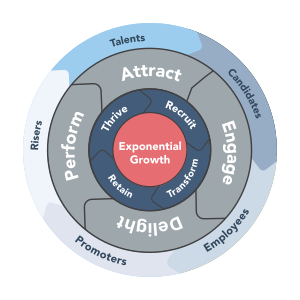
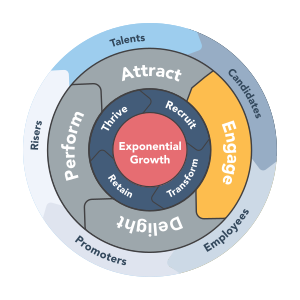
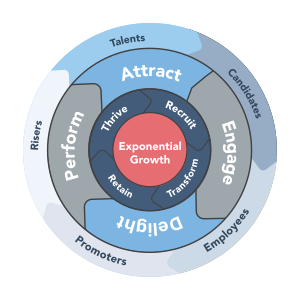
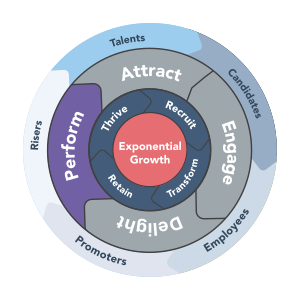
 Flywheel
 Partner

What Is It?
Managing Competency Framework is a consultancy program that enables companies to move beyond scattered and generic competency definitions — building a role-based competency architecture that is directly tied to business priorities and actually usable.

The structure created defines clear performance expectations for each role and establishes competencies as a shared language across the organization. In this way, competencies become not just something defined — but a reference point that drives decisions.

SWOT — Typical Organization Profile
This is the typical profile of organizations where a competency framework exists but isn't reflected in business outcomes.
STRENGTHS
 Core HR processes and data infrastructure are in place
Job descriptions and role structures have been established
Leadership is willing to invest in talent management
Awareness of the competency approach and initial groundwork already exist
Core HR processes and data infrastructure are in place
Job descriptions and role structures have been established
Leadership is willing to invest in talent management
Awareness of the competency approach and initial groundwork already exist
WEAKNESSES
 The competency framework is derived from benchmark lists — not specific to the company, role, or business priorities
Competencies are not linked to performance, hiring, or development processes; they don't feed into decision mechanisms
Competency definitions are mixed with motivational elements and contain conflicting behavioral expectations
No shared, consistent competency language has formed across the organization
The competency framework is derived from benchmark lists — not specific to the company, role, or business priorities
Competencies are not linked to performance, hiring, or development processes; they don't feed into decision mechanisms
Competency definitions are mixed with motivational elements and contain conflicting behavioral expectations
No shared, consistent competency language has formed across the organization
OPPORTUNITIES
 Talent scarcity is increasing — clear role and competency definitions accelerate the right match
Skills-based hiring is on the rise — competency clarity is becoming a competitive advantage
AI is redefining role requirements — updating frameworks is becoming mandatory
Data-driven decision culture is spreading — the competency framework forms its foundation
Talent scarcity is increasing — clear role and competency definitions accelerate the right match
Skills-based hiring is on the rise — competency clarity is becoming a competitive advantage
AI is redefining role requirements — updating frameworks is becoming mandatory
Data-driven decision culture is spreading — the competency framework forms its foundation
THREATS
 Ambiguous competency criteria systematically drive hiring errors
Static frameworks cannot adapt to rapidly changing role requirements
While competitors invest in talent intelligence infrastructure, the organization falls behind
Incorrectly defined competencies lead to flawed performance and development decisions
Ambiguous competency criteria systematically drive hiring errors
Static frameworks cannot adapt to rapidly changing role requirements
While competitors invest in talent intelligence infrastructure, the organization falls behind
Incorrectly defined competencies lead to flawed performance and development decisions
Who It's For / Who It's Not For
 CHROs who see that hiring, promotion, and performance decisions are still subjective despite having a competency framework
Talent Managers who can't find a clear answer to the problem: 'we define the right competencies but don't see the right performance'
Organizations that recognize new role and competency needs are emerging with AI, but their current structures can't accommodate this change
HR and leadership teams that want to analyze whether current employees are truly ready for changing job expectations
Structures that want to make more objective decisions by linking competencies to performance outputs and KPIs
CHROs who see that hiring, promotion, and performance decisions are still subjective despite having a competency framework
Talent Managers who can't find a clear answer to the problem: 'we define the right competencies but don't see the right performance'
Organizations that recognize new role and competency needs are emerging with AI, but their current structures can't accommodate this change
HR and leadership teams that want to analyze whether current employees are truly ready for changing job expectations
Structures that want to make more objective decisions by linking competencies to performance outputs and KPIs
 Projects being pushed forward only as an HR initiative without senior leadership ownership — this engagement requires an organizational decision; structures without sponsorship don't advance
Organizations not aiming to build a shared competency language and expectation alignment between HR, business units, and leadership — even if a framework is built, it won't be used
Structures not ready to question whether the current setup really works or confront uncomfortable truths — progress stays surface-level in organizations protecting assumptions
Organizations without the intention to reflect decisions into processes and maintain execution discipline — the framework is defined but never used; the system stays on paper
Organizations not aiming to holistically link competencies to performance, KPIs, career, development, and reward processes
Projects being pushed forward only as an HR initiative without senior leadership ownership — this engagement requires an organizational decision; structures without sponsorship don't advance
Organizations not aiming to build a shared competency language and expectation alignment between HR, business units, and leadership — even if a framework is built, it won't be used
Structures not ready to question whether the current setup really works or confront uncomfortable truths — progress stays surface-level in organizations protecting assumptions
Organizations without the intention to reflect decisions into processes and maintain execution discipline — the framework is defined but never used; the system stays on paper
Organizations not aiming to holistically link competencies to performance, KPIs, career, development, and reward processes
What Do You Gain?
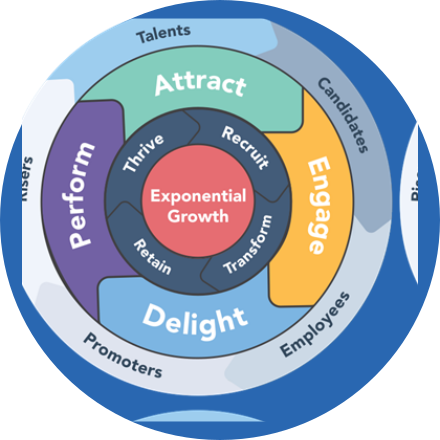
Role-Based Competency & Performance Definition Infrastructure
Behavioral & Expectation Clarity
Data Model Ready for Performance Management
Role, Level & Job Code Architecture
Infrastructure Ready for Competency-Based Assessment
Integration-Ready System Infrastructure
The Numbers

87%

62%
50% / 40%
Working Model
ANALYZE
DESIGN
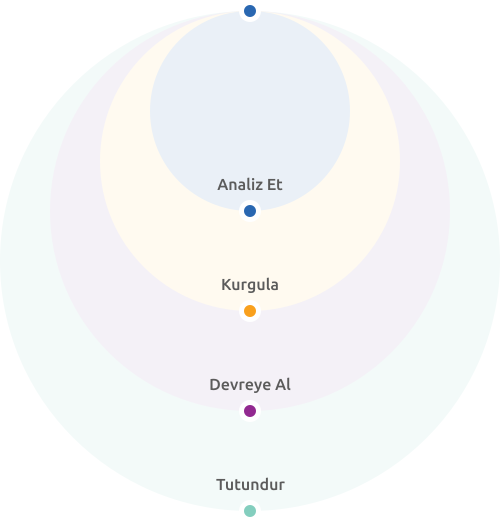
DEPLOY
SUSTAIN
Working Model





Diagnose the Current Structure
Architect the Structure
Prepare for Use
Keep It Current
Diagnose the Current Structure
Architect the Structure
Prepare for Use
Keep It Current
How We Work

We Start with Data
All design decisions are shaped not by intuition, but by data, analysis, and current-state findings.

We Align Stakeholders
HR, business units, and leadership teams are aligned around a shared competency language and expectations; different perspectives come together in one system.

We Build Together
The engagement is not delivered through ready-made templates — it is designed together with the client team, grounded in the organization's own business reality and role structures.

Independently Manageable Structure
At the end of the consultancy, teams can manage and update the built structure without external support.
Common Objections


"We already have a competency framework."
 Answer
"HR can handle this internally — we don't need outside help."
Answer
"We'll take a benchmark competency matrix model and adapt it."
Answer
"It's a large project right now — we don't have time."
Answer
"We built a framework before but nobody used it — we'll end up in the same place."
Answer
"We've invested in this area but we can't find qualified people in the market."
Answer

Our Approach

We Proceed Based on Diagnosis

We Link Behavior to Results

We Design for Use
Prerequisites For Success
This consultancy produces real value only when these conditions are met. Otherwise the process moves forward, but no lasting result is formed.

Senior Leadership Ownership

Leadership & Stakeholder Alignment

Confronting Reality & Clarity

Decision-Making & Execution Discipline
Related Solutions
 ASS
ASS
Competency Gap Analysis
Compares employees' current competency levels with role expectations; maps critical gaps and priority development areas.
 ASS
ASS
TMA Talent Assessment
Holistically measures individual competency, motivation, and personality profile. Grounds role profiles in data.
 CON
CON
Implementing Motivation Framework
Adds the motivation dimension to the competency axis. The natural complement for two-axis talent management.
 CON
CON
Building Performance Management System
End-to-end performance management system built on the competency infrastructure. The upper layer of the framework.
 PTP
PTP
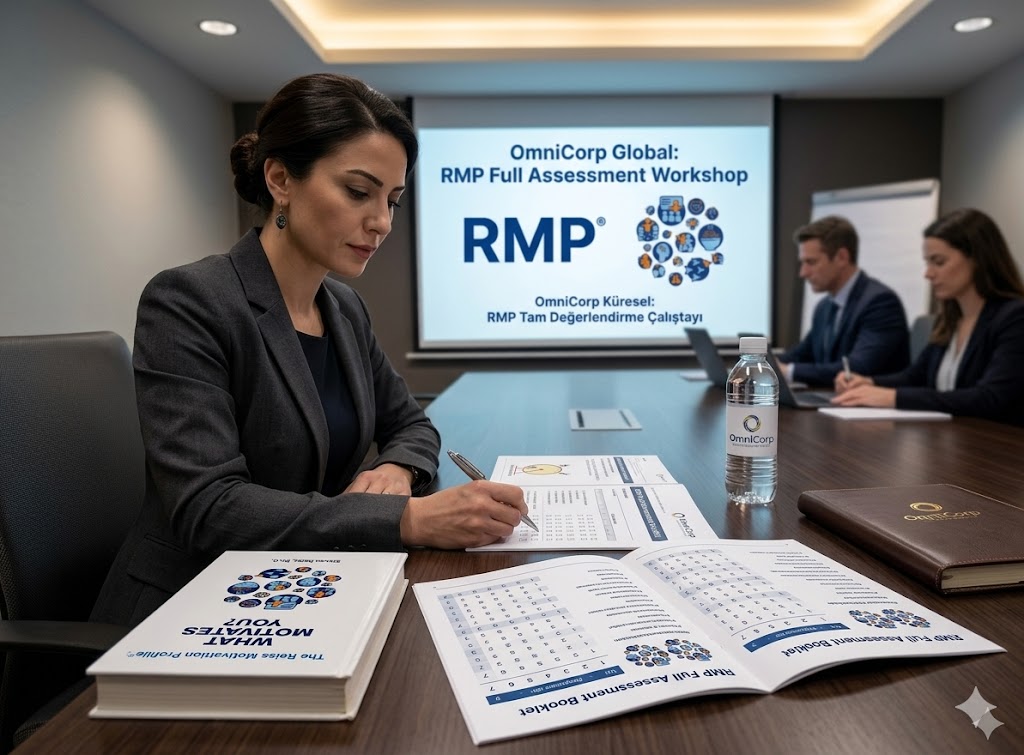
RMP Motivation Training - Who am I
Training where managers discover their motivation profile. Reinforces the behavioral dimension of the framework.
COA
Competency-Based Development Coaching
Coaching program that converts competency gaps into individual development goals.
Overview

General Overview
 Persona
 Project Duration
 Min. Consulting Days
 Language
What's Included?
-
 In-PersonRecommended
 -
Live Remote
-
Hybrid
-
Pre-AnalysisExisting Data / Documents
-
 AssessmentOpsiyonel
 -
Project Mgmt Platform
-
Manager / Sponsor Interview
-
Reporting
-
Supporting Resources
-
Implementation Support
-
Workshop
-
Micro LearningOpsiyonel
-
E-LearningOpsiyonel
 Önerilen Eğitim
RMP Motivation Training - Who am I