







Technology Selection & Vendor Evaluation Advisory
 Persona
 Project Duration
 Min. Days
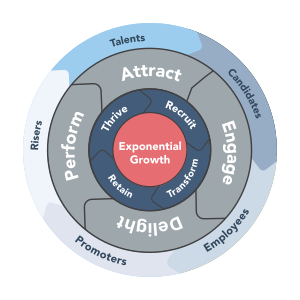
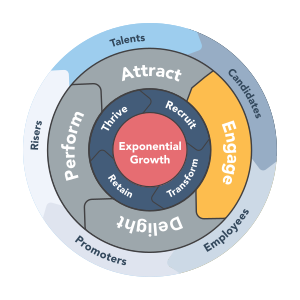
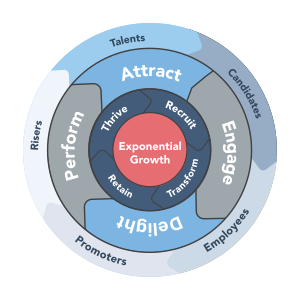
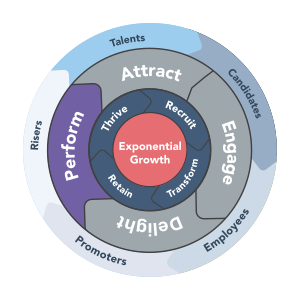
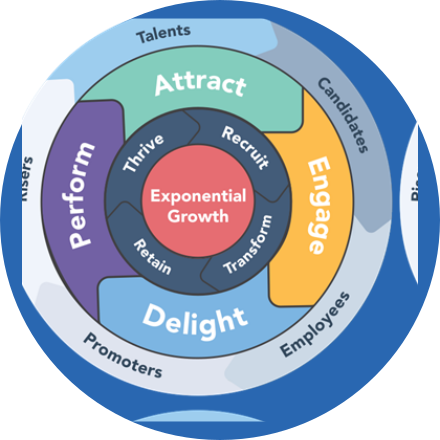
 Flywheel
 Partner
What Is It?
Technology Selection & Vendor Evaluation Advisory is a structured consulting service that enables organizations to select HR technologies and turn that selection into a functional, implementable system. Today, organizations must navigate hundreds of platforms, similar features, and complex pricing structures. However, the real challenge is not selecting the right technology—it is ensuring that the chosen technology actually works within the organization. Most investments fail not at the point of selection, but during implementation. This service approaches technology selection not as a simple comparison exercise, but as the design of an end-to-end system that will function effectively. Throughout the process, the current structure, needs, and priorities are clarified, and alternative solutions are evaluated within a structured framework.

The consulting approach can follow two models:
A fully independent evaluation framework where all vendors are assessed equally
A model that incorporates proven, field-tested solutions to enable faster and lower-risk decisions
Ultimately, organizations gain more than a technology decision—they gain a decision system that defines how the technology will be positioned, integrated, and deliver value.

SWOT — Typical Organizational Profile
STRENGTHS
 A clear digital transformation agenda. The organization is committed to strengthening HR processes through technology, with both budget and executive support in place.
High level of problem awareness. The limitations of current systems are recognized, and the search for new solutions has been actively initiated.
Strong internal process knowledge. HR teams have a solid understanding of current operations and bottlenecks, providing a strong foundation for defining the right solution.
Clear decision-making momentum. The organization has moved beyond the “something must be done” stage and is actively evaluating technology investments.
A clear digital transformation agenda. The organization is committed to strengthening HR processes through technology, with both budget and executive support in place.
High level of problem awareness. The limitations of current systems are recognized, and the search for new solutions has been actively initiated.
Strong internal process knowledge. HR teams have a solid understanding of current operations and bottlenecks, providing a strong foundation for defining the right solution.
Clear decision-making momentum. The organization has moved beyond the “something must be done” stage and is actively evaluating technology investments.
WEAKNESSNES
 Lack of a structured decision-making model. Vendor selection is often driven by demo performance, references, and market perception.
Legacy systems are losing flexibility. Previously implemented core HR platforms struggle to adapt to next-generation applications.
High HR–IT dependency. HR teams rely heavily on IT for technical evaluations.
Hidden change costs are underestimated. Adaptation time and user resistance are not sufficiently considered.
Lack of a structured decision-making model. Vendor selection is often driven by demo performance, references, and market perception.
Legacy systems are losing flexibility. Previously implemented core HR platforms struggle to adapt to next-generation applications.
High HR–IT dependency. HR teams rely heavily on IT for technical evaluations.
Hidden change costs are underestimated. Adaptation time and user resistance are not sufficiently considered.
OPPORTUNITIES
 Accelerating shift toward unified platforms. HR technologies now offer more integrated solutions, creating an opportunity for simpler system architecture.
HR tech is being reshaped. AI integration and platform consolidation provide a strong opportunity to reassess existing systems.
Faster and more accurate decision-making. A structured selection approach can shorten decision timelines and reduce implementation risk.
Strengthening data-driven management. The right technology selection enables HR to move from intuition-based decisions to measurable insights.
Accelerating shift toward unified platforms. HR technologies now offer more integrated solutions, creating an opportunity for simpler system architecture.
HR tech is being reshaped. AI integration and platform consolidation provide a strong opportunity to reassess existing systems.
Faster and more accurate decision-making. A structured selection approach can shorten decision timelines and reduce implementation risk.
Strengthening data-driven management. The right technology selection enables HR to move from intuition-based decisions to measurable insights.
THREATS
 High risk of implementation failure. A significant portion of HR technology projects fail to deliver expected value after selection.
Vendor-driven bias in decisions. Demo, pricing, and reference processes are often structured in favor of vendors.
Risk of locking into the wrong platform. Early or incorrect decisions can create long-term dependency.
Increasing technology complexity. Non-integrated systems lead to fragmented data and operational inefficiencies.
High risk of implementation failure. A significant portion of HR technology projects fail to deliver expected value after selection.
Vendor-driven bias in decisions. Demo, pricing, and reference processes are often structured in favor of vendors.
Risk of locking into the wrong platform. Early or incorrect decisions can create long-term dependency.
Increasing technology complexity. Non-integrated systems lead to fragmented data and operational inefficiencies.
Who Is It For? / Who Is It Not For?
 Organizations on the verge of a new HR technology decision. Those planning to replace their current system, adopt a new platform, or redesign their HR tech stack.
Teams unable to reach a decision. Those who have engaged with multiple vendors and completed demo processes but still have not clarified “which one is right for us.”
HR leaders seeking to minimize selection risk. Those who understand the cost of a wrong decision and want to manage the process within a structured and defensible framework.
Organizations aiming to establish HR–IT alignment. Those who want to approach technology decisions from both technical and business perspectives, not in isolation.
Organizations on the verge of a new HR technology decision. Those planning to replace their current system, adopt a new platform, or redesign their HR tech stack.
Teams unable to reach a decision. Those who have engaged with multiple vendors and completed demo processes but still have not clarified “which one is right for us.”
HR leaders seeking to minimize selection risk. Those who understand the cost of a wrong decision and want to manage the process within a structured and defensible framework.
Organizations aiming to establish HR–IT alignment. Those who want to approach technology decisions from both technical and business perspectives, not in isolation.
 Organizations that have already made their decision. If vendor selection is complete and the process has reached the contract stage, this service is no longer relevant.
Those committed to a specific product. If the decision “we will go with X platform” has already been made at the outset, the evaluation process loses its purpose.
Teams with a “we already know” mindset. Strong IT teams may make technical decisions; however, HR technology is not purely a technical choice. When usage and adoption are overlooked, seemingly correct decisions fail in practice.
Organizations that misdefine the problem. If the real need is process or capability development but is being addressed through a technology investment, this service is not the right starting point.
Organizations that have already made their decision. If vendor selection is complete and the process has reached the contract stage, this service is no longer relevant.
Those committed to a specific product. If the decision “we will go with X platform” has already been made at the outset, the evaluation process loses its purpose.
Teams with a “we already know” mindset. Strong IT teams may make technical decisions; however, HR technology is not purely a technical choice. When usage and adoption are overlooked, seemingly correct decisions fail in practice.
Organizations that misdefine the problem. If the real need is process or capability development but is being addressed through a technology investment, this service is not the right starting point.
What Do You Gain?
Clear and Shareable Decision Framework
Current State and Needs Mapping
Comparable Vendor Evaluation
Practical Technology Selection
Implementation Readiness and Roadmap
Contract and Commercial Terms Guidance
Numbers

83%

42%

9 Systems · $310

3,800+
Value Timeline

Working Model
Current State & Needs Assessment

Decision System & Evaluation Framework

Comparison, Alignment & Final Decision

RFP, Contract & Implementation Readiness

Current State & Needs Assessment

Decision System & Evaluation Framework

Comparison, Alignment & Final Decision

RFP, Contract & Implementation Readiness
How We Work

We Start with Data
Technology decisions are shaped not by assumptions or vendor presentations, but by the organization’s current systems, process data, and real user experience. The first step is always to see the reality clearly.

We Align Stakeholders
One of the most common challenges is that HR, IT, and business units approach the same technology decision with different expectations. Throughout the process, all stakeholder priorities and constraints are aligned within a shared framework.

We Ensure Transparency and Traceability
Evaluation criteria, vendor comparison results, and the rationale behind the final decision are documented and shared throughout the process. Contract terms and exit scenarios are addressed within this transparent structure.

We Simplify Complexity
With over 3,800 vendors, similar demos, and non-comparable pricing models, creating a clear and structured view is at the core of this advisory. The process is designed around the organization’s specific needs.

We Build an Independently Manageable Structure
At the end of the engagement, the organization is equipped with a clear understanding of why the technology was selected, how to manage it, and how to plan the next steps. We build capability—not dependency.
Common Objections

“We are already engaging vendors directly; we can manage the process ourselves.”
“Our IT team is strong; they handle the technical evaluation.”
“We have already shortlisted a few vendors and will choose among them.”
“Do we really need such a detailed process?”
“We cannot allocate budget for this.”
“An external party cannot understand our needs.”

“We are already engaging vendors directly; we can manage the process ourselves.”
“Our IT team is strong; they handle the technical evaluation.”
“We have already shortlisted a few vendors and will choose among them.”
“Do we really need such a detailed process?”
“We cannot allocate budget for this.”
“An external party cannot understand our needs.”
Our Approach

We Filter Through Experience

We Seek What Is Right, Not What Is Best

Decision Quality Comes Before Speed
Reliable Technology and Consulting Partners

Prerequisites For Success

Active Stakeholder Participation

Facing Reality with Clarity

Decision Discipline and Consistency
Time and Focus Commitment
Related Solutions
 ASS
ASS
HR Team Efficiency
Assesses the current efficiency level, process maturity, and digital readiness of the HR team before entering the technology selection process. Clarifies what is truly a technology issue versus a process or capability-related challenge.
.jpg?width=600&height=400&name=depositphotos_480120482-stock-photo-young-businesswoman-holding-box-of%20(1).jpg) PTP
PTP
The New HR Business Partner
An 8-month transformation program that prepares HR teams to use selected technologies from a strategic HRBP perspective. Includes 147 hours and 16 real business challenges, based on the Bersin–Ulrich–Gartner methodology.
 CON
CON
Building the New HR in AI Age
Goes beyond HR technology selection to redefine the role, structure, and position of the HR function in the age of AI. Selecting the right technology is only the beginning—this advisory focuses on turning it into strategic value.
Overview

General Overview
 Target Persona
 Project Duration
 Min. Days
 Language
What's Included?
-
 On-siteAvailable
 -
Live OnlineAvailable
-
HybridAvailable
-
Pre-WorkHR Tech Stack · HR Process Analysis · Pain Points
-
AssessmentTechnology Satisfaction Survey · Digital Fluency · IT Service Experience
-
FlywheelDelight
-
 E-LearningOptional
 -
ImplementationOptional
-
PartnerSP
 Recommended Training
Vendor Trainings
 Recommended Training
Custom E-Learning