






Low performance, missed deadlines, broken commitments, and unowned decisions — all are indicators of an accountability gap.

DID YOU
KNOW?
And this gap becomes more costly for the organization every day.

52%
of employees avoid discussing a colleague’s performance issue.

47%
do not share improvement ideas because they fear “overstepping into someone else’s area.”

49%
wait more than one week to speak up when a decision begins to cause problems.

55%
avoid speaking up when they believe someone has made a poor strategic decision.
Common Problems Many Organizations Face


Decisions are made in meetings, but employees fail to take action afterward.
Decisions are made in meetings, but employees fail to take action afterward.


Low performance is tolerated, which demotivates top performers.
Low performance is tolerated, which demotivates top performers.



Leaders shift responsibility to employees instead of acknowledging their own role in unresolved issues.
Leaders shift responsibility to employees instead of acknowledging their own role in unresolved issues.


Managers sometimes complete the work themselves instead of reinforcing accountability.
Managers sometimes complete the work themselves instead of reinforcing accountability.
Decisions are made in meetings, but employees fail to take action afterward.
Low performance is tolerated, which demotivates top performers.
Leaders shift responsibility to employees instead of acknowledging their own role in unresolved issues.
Managers sometimes complete the work themselves instead of reinforcing accountability.
The Hidden Costs Of These Problems

Performance Cost
50% of employees say managers do not sufficiently hold accountability conversations. (Gallup Research)

Cultural Cost
Teams with low accountability cultures have 21% lower profitability, and top performers quietly leave.

Strategic Cost
Managers become task trackers instead of strategic leaders, while the CHRO continuously operates in firefighting mode.
If These Problems Continue
10 Days
When the first deadline is missed, no one speaks up. The manager may avoid confronting the situation immediately. The negative impact is not yet visible, but normalization begins.
10 Months
Low performance becomes normalized. Expectations become unclear.
Top performers notice this and become demotivated or leave.
10 Years
The accountability culture collapses entirely. Managers turn into task trackers, and the performance management system exists only on paper. This approach leaves lasting damage in the organization.


“Accountability is not a disciplinary mechanism — it is a dialogue where respect and expectations are discussed openly.”
— Joseph Grenny
Co-Founder, Crucial Learning
What Is This Program?
Crucial Conversations® for Accountability is a global leadership methodology based on 30+ years of research. Crucial Conversations® for Accountability is a global leadership methodology based on 30+ years of research.
This methodology ensures that commitments are honored, expectations are clearly discussed, and performance issues are addressed constructively. Without accountability, leadership cannot exist.

30+
years of research
500+
Global Organizations
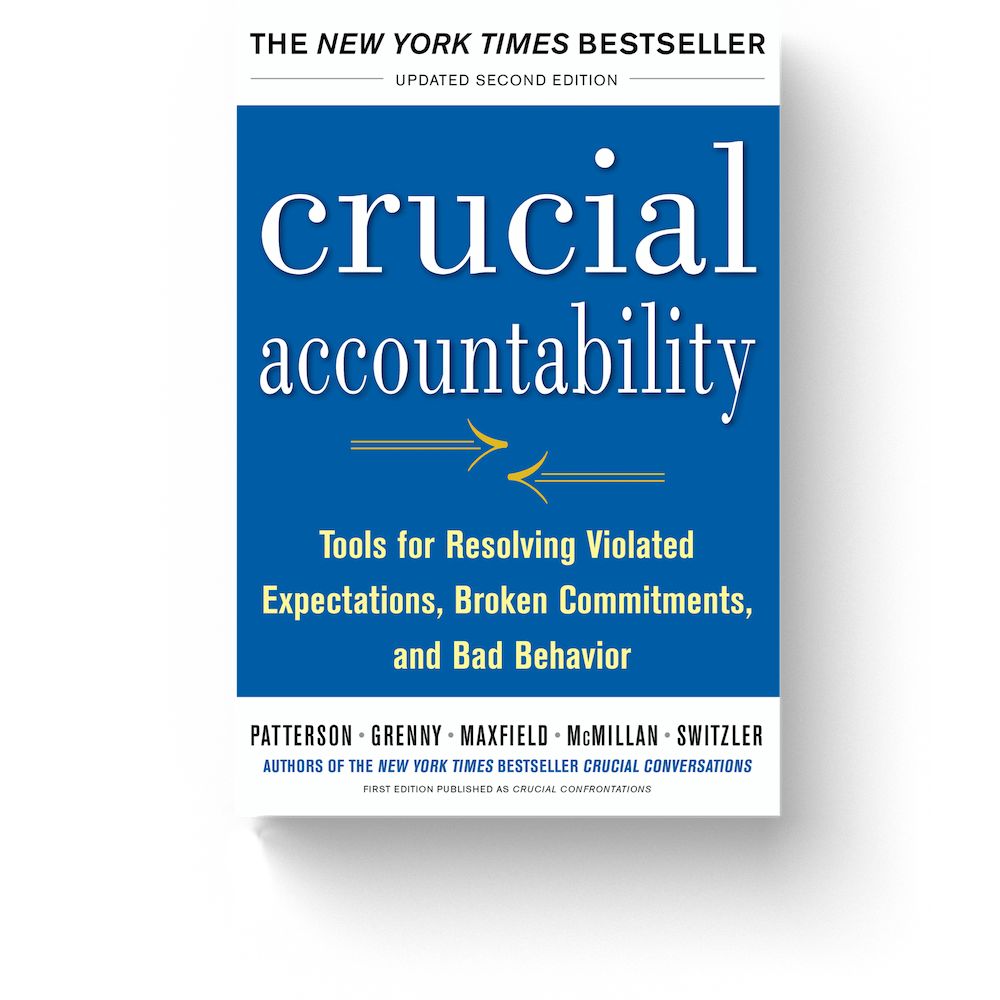
 NY Times #1 Bestseller | Kerry Patterson | Joseph Grenny | Ron McMillan
Data Insight
Companies with strong accountability cultures perform 2.5 times better than their competitors.
— Gallup
Learning Outcomes

Address low performance directly without wasting time.
Not only managers but also employees hold each other accountable.
Blame culture disappears and ownership increases.
Performance conversations become constructive and solution-oriented instead of defensive.
A culture of ownership emerges, strengthening team trust.
Expectations and follow-up mechanisms become clear — decisions turn into action.
Who Is It For?
 Suitable For
Leadership teams committed to building an accountability culture
Managers who want to manage performance while maintaining healthy relationships
Organizations seeking to ensure decisions translate into action and ownership
 Not Suitable For
Organizations focused on maintaining the status quo without willingness to change
Companies unwilling to truly implement accountability
Environments where unacceptable behavior is tolerated to avoid damaging relationships
Organizations where leaders expect accountability from their teams but do not demonstrate it themselves
Organizations with “untouchable” managers or employees
Companies where the performance system exists only on paper
Organizations that postpone addressing problems under the excuse of “we are a family”
Customer Voice
“Before the Crucial Accountability program, we often heard ‘I told them, but they didn’t do it.’ After the program, my managers were able to set clear expectations and ensure ownership in the same meeting. The culture changed.”
— HR Director
Finance Sector, Turkey
Related Solutions
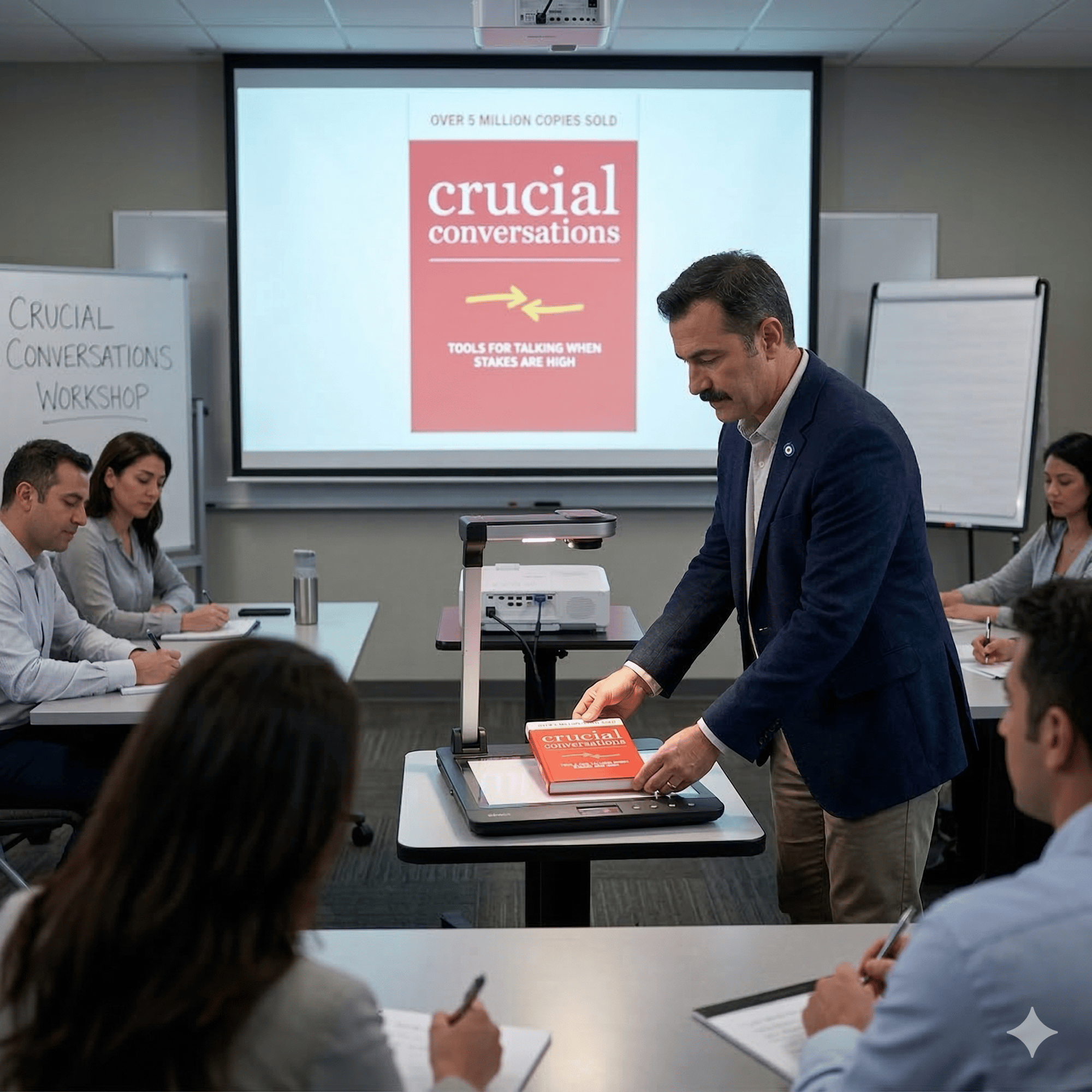 Premium Training
Crucial Conversations for Mastering Dialogue®
Foundation for accountability conversations — recommended prerequisite program.
 Premium Training
Crucial Influence®
A natural follow-up program focused on influencing behavior change.
.jpg?width=1409&height=736&name=unnamed%20(15).jpg) Assessment
Assessment
Crucial Skills Insights: Accountability Assessment
Used as a pre-assessment before the program.
Program Details

Crucial Learning
Partner
LEC | PERC | GROC | LERG
Challenge Code
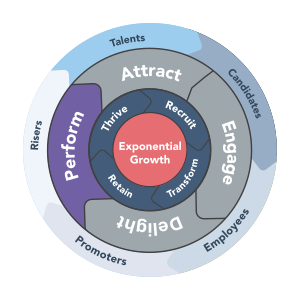
PERFORM
Flywheel
Leaders, Project Managers
Target Audience
Min 8 — Max 16
Participants
2 Days
Duration
In-Person — Live Online — E-Learning (English)
Delivery Format
TR / EN
Language Options
Pre-Assessment
Optional
Customization
Optional
RMP — Optional
Assessment Tool
Crucial Skills Insights: Accountability Assessment
Pre-Work
Training Kit
Available
Gamification
Available
Certificate
Available
Awards
Available
Additional Resources
Available
Post-Training Reinforcement
Optional
ROI Measurement
Available
Crucial Conversations® for Mastering Dialogue
Previous Training
Crucial Influence®
Follow-Up Programs