







DID YOU
KNOW?

%94
 Source: Getting Things Done® Global Research
Common Problems Many Organizations Face


Expertise exists, but there is no systematic work management discipline.
Expertise exists, but there is no systematic work management discipline.
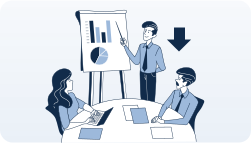
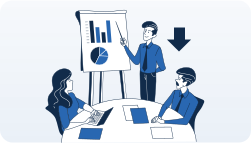
Decisions made in meetings struggle to translate into action and follow-up.
Decisions made in meetings struggle to translate into action and follow-up.



People are constantly busy, yet priorities remain unclear.
People are constantly busy, yet priorities remain unclear.


A significant portion of work is still carried in people’s minds rather than managed within a reliable system
A significant portion of work is still carried in people’s minds rather than managed within a reliable system
Expertise exists, but there is no systematic work management discipline.
Decisions made in meetings struggle to translate into action and follow-up.
People are constantly busy, yet priorities remain unclear.
A significant portion of work is still carried in people’s minds rather than managed within a reliable system
The Hidden Costs Of These Problems

Performance Cost
The lack of work discipline from just one or two team members can reduce overall team productivity by an average of 24%.

Cultural Cost
"The language of “it won’t get done anyway” begins to spread — gradually eroding the culture of accountability.

Strategic Cost
More than 60% of employees can only achieve 1–2 hours of deep focus per day.
If These Problems Continue
If people: Do not build a reliable productivity system, continue carrying commitments in their mind, fail to clarify priorities and do not create space for deep focus
10 Days
Meetings generate new commitments. However, these commitments remain stored in people’s minds. Priorities remain unclear. Small delays begin, though their negative impact is not yet noticeable.
10 Months
Urgency replaces priorities. Missing deadlines becomes normalized. The language of “it won’t get done anyway” spreads. Accountability weakens. Managers provide feedback based on emotions rather than data. They cannot properly coach their teams on productivity and work discipline because they cannot identify the root cause of disruptions.
10 Years
The organization operates in a constant reactive mode. Work gets done through pressure, last-minute completion, and micromanagement. Strategic thinking weakens. Ownership disappears. Firefighting becomes a cultural norm. High-potential employees burn out or leave. Performance decline becomes structural, and the organization suffers lasting damage.


“Your mind is for having ideas, not for holding them.”
—David Allen
Founder of the GTD® Methodology
What Competency Is Needed To Solve This?

Work Management
Discipline
The ability of individuals and teams to make all work visible, clarify it, and consciously prioritize it in order to fulfill commitments on time.
What Is This Program?
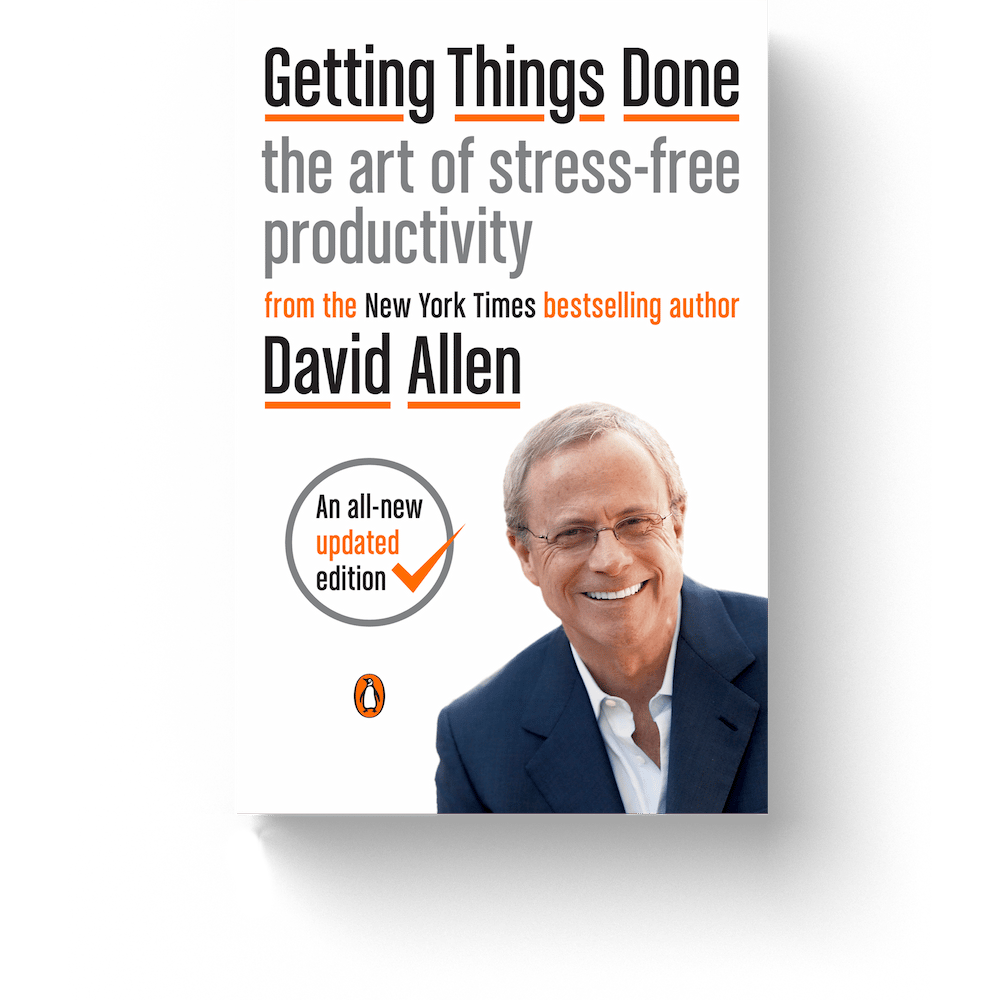
Getting Things Done® (GTD) is a work management methodology developed by David Allen and applied globally for more than 30 years. GTD defines productivity not as working harder, but as collecting tasks into a trusted system, clarifying them, and consciously prioritizing them.
The methodology aims to clear the mind from open loops by creating an “external brain,” improving clarity and decision quality. Participants analyze real workload scenarios from their own organizations and develop practical implementation plans.

15 million+
books sold
300+
Fortune 500 companies
2+ million
participants worldwide
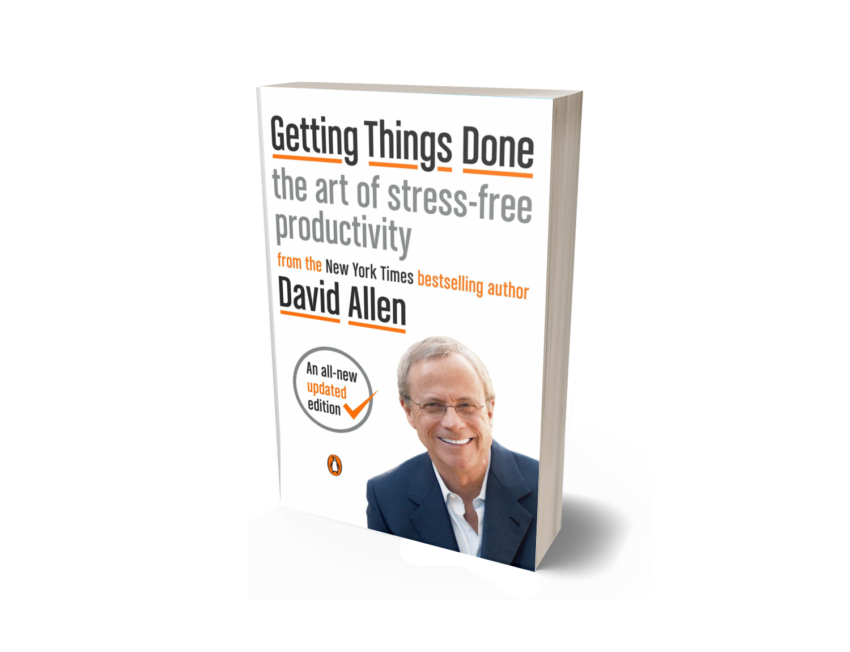
 Global Bestseller | David Allen
Data Insight
Professionals applying GTD gain 21–40 additional productive minutes per day, and their likelihood of missing deadlines is 39 times lower
—GTD Global Impact Research
Learning Outcomes


55× lower likelihood of leaving projects unfinished
39× lower likelihood of missing deadlines
18× lower likelihood of feeling overwhelmed
21–40 minutes of additional productive time per day on average
Who Is It For?
 Suitable For
Leaders who are constantly busy but struggle with focus and productivity
Organizations that struggle to turn meeting decisions into action
Teams that cannot make strategic progress
Companies seeking to establish a culture of honoring commitments on time
Organizations that want to shift from reactive work culture to systematic work discipline
 Not Suitable For
Organizations that interpret busyness as a performance indicator
Cultures that consider chaos an acceptable working style
Organizations that mistake multitasking for productivity
Structures that view systematic work as restrictive
Leaders who intentionally distance themselves from structured follow-up mechanisms
 Urgent
According to Daron Acemoglu’s research, despite rapid technological advancement in the United States, total factor productivity has not increased at the expected level. Why does this happen despite so much technological progress? There is a name for it in the literature: The Productivity Paradox. Technology investments increase — but productivity does not rise at the same rate. Because organizations invest in technology but not in productivity discipline.

This is the corporate reality:
We teach ERP, we teach CRM, we teach AI tools and we teach how to use data dashboards.
But we rarely teach:
How work is managed, how commitments are honored, how priorities are chosen, and how the mind is kept clear.
Technology does not increase productivity.
The work discipline of the people who use it does.
Customer Voice
"After the GTD training, we saw a dramatic difference in our team. Meetings are clearer, actions are more visible, and commitments are tracked through the system. Everyone now knows what the next step is."
—GTD Corporate Client Feedback
Related Solutions
 Program
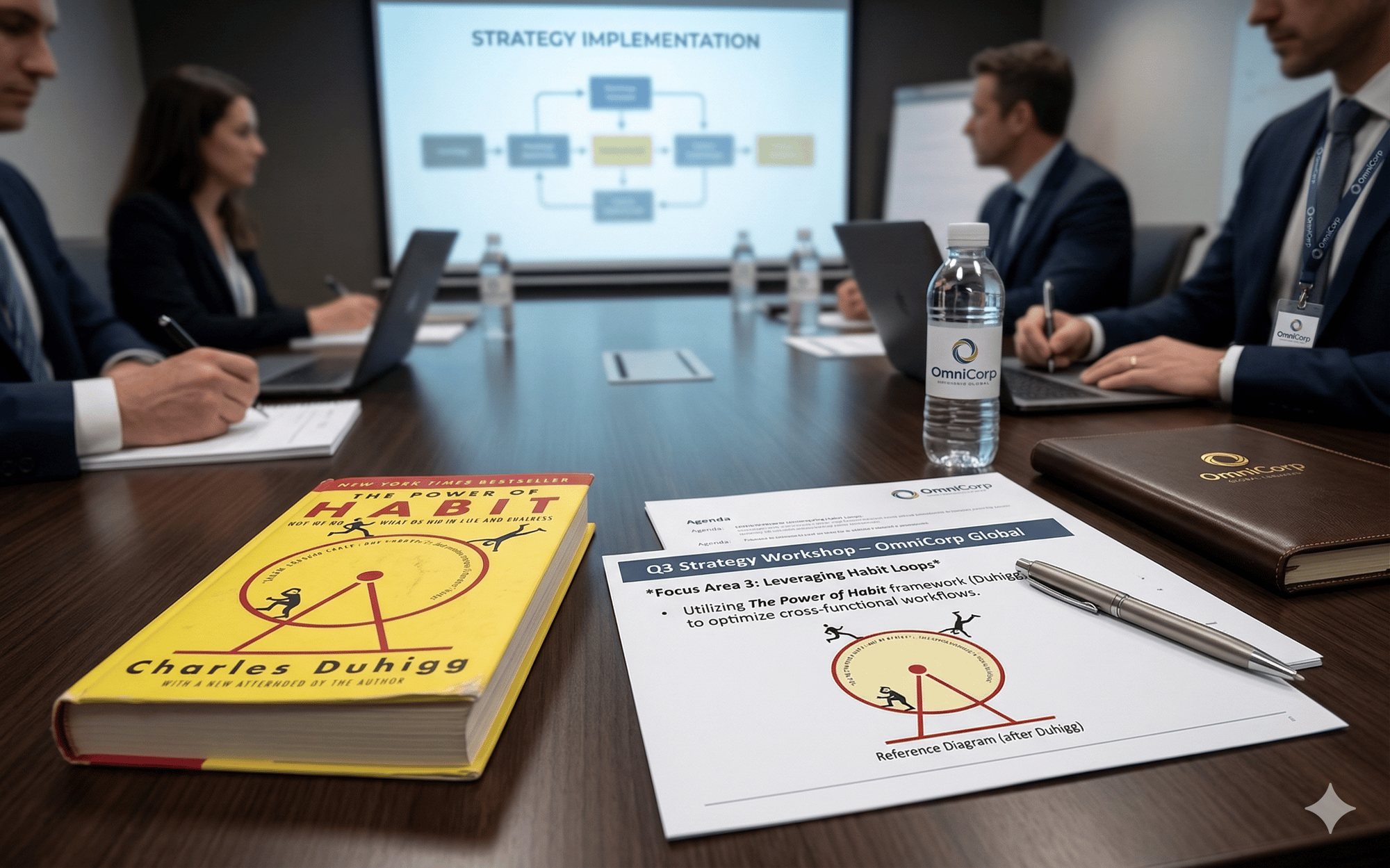
Program Power of Habit®
Transform behavioral change into lasting habits.
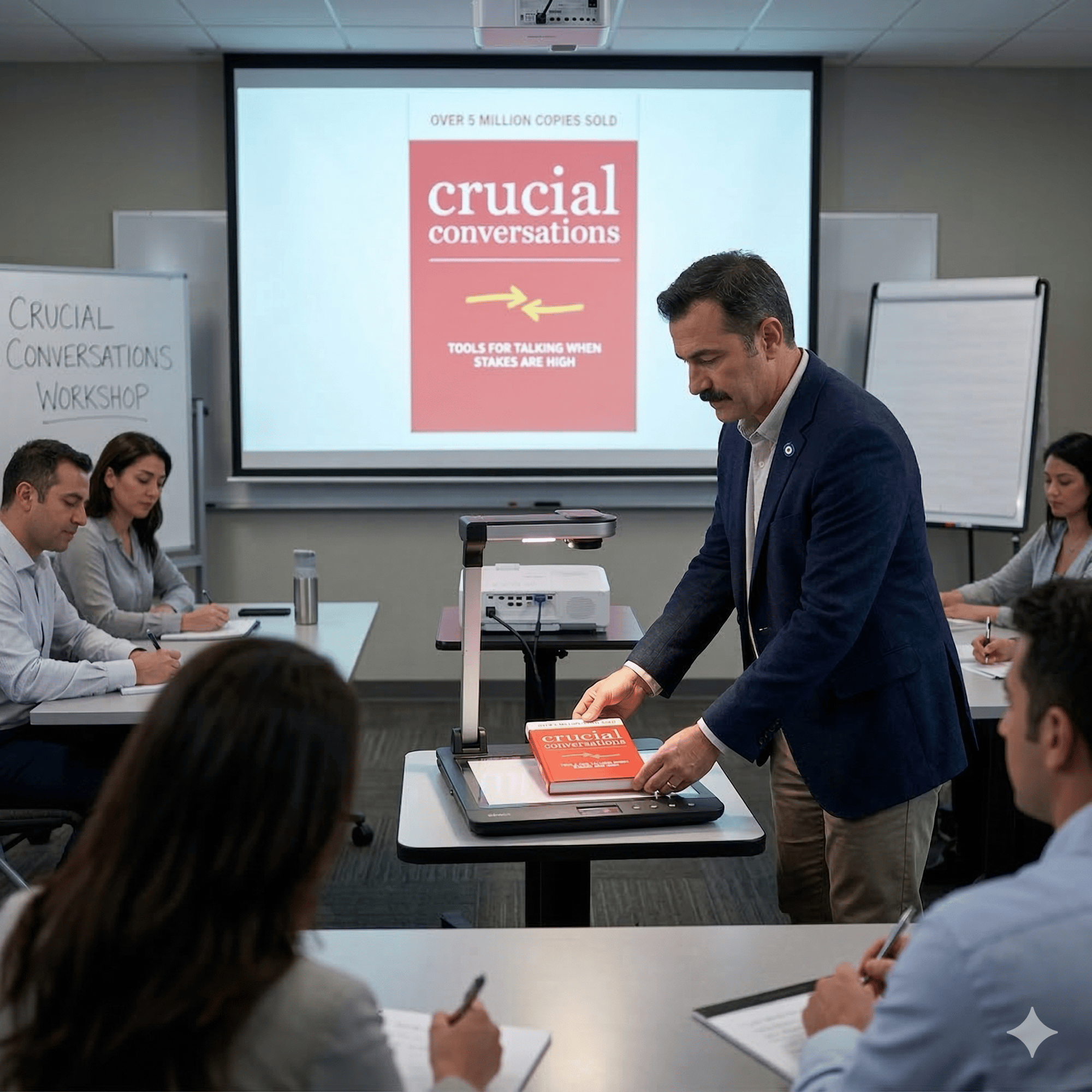 Program
Crucial Conversations® for Accountability
Reinforce commitments through accountability.
.jpg?width=1024&height=572&name=unnamed%20(19).jpg) Assessment
Assessment
Productivity Readiness Index
Measures organizational readiness for productivity.
.jpg?width=668&height=1024&name=unnamed%20(17).jpg) Assessment
Assessment
RMP for Change Readiness
Motivation-based change readiness analysis.
Program Details

Getting Things Done® (GTD)
Product Name
Crucial Learning
Partner
PERC
Challenge Code
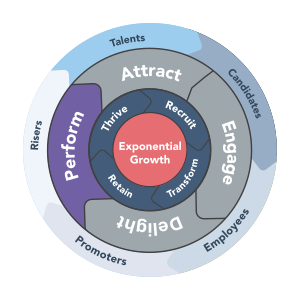
PERFORM
Flywheel
All Employees, Project Managers
Target Audience
Min 8 --- Max 16
Participants
1 Day
Duration
In-Person · Live Online · E-Learning (English)
Delivery Format
TR / EN
Language Options
Pre-Assessment
Optional
RMP — Optional
Assessment Tool
Crucial Skill Insights: Productivity Readiness Index
Pre-Work
Training Kit
Available
Gamification
Available
Certificate
Available
Awards
Available
Additional Resources
Available
Post-Training Reinforcement
Optional
ROI Measurement
Optional
Power of Habit® · Crucial Conversations® for Accountability
Follow-Up Programs