






The average direct cost is $17,000 per hire — but when team morale, productivity loss, and cultural damage are included, the total cost can reach $150,000.
75% of employers admit to making the wrong hiring decision.

DID YOU
KNOW?
$17,000 per hire
 CareerBuilder, 2024 | Toggl Hire Report, 2025
 Urgent
So is the problem in the recruitment process? No. The problem is not looking where we actually should be looking. What is that? Human motivation (Basic Desires).
A successful hiring decision has two components: Competence and Motivation.
Competence
Can they do the job?
Motivation
Do they want to do it?

Most companies ignore one side of this equation. They focus excessively on “can they do it?” and fail to measure whether they truly want to do it. Candidates can claim they are capable of performing roles that do not match their natural motivations — and for a while they may even succeed. But whether they truly want to do it consistently is another question entirely. In some cases, they may even mislead themselves.
Common Problems Many Organizations Face
Managers and HR professionals across roles often share the same blind spot:


Recruitment & Promotions
Talent decisions eventually rely on intuition. Employee and leadership motivations are not systematically measured, and strategic talent decisions continue to rely on assumptions. Result: 75% of hires are wrong.Recruitment & Promotions
Talent decisions eventually rely on intuition. Employee and leadership motivations are not systematically measured, and strategic talent decisions continue to rely on assumptions. Result: 75% of hires are wrong.
Managers
Managers try to manage team motivation based on personal experience and intuition. They cannot scientifically analyze why someone becomes motivated or loses motivation. Result: Increase in quiet quitting.Managers
Managers try to manage team motivation based on personal experience and intuition. They cannot scientifically analyze why someone becomes motivated or loses motivation. Result: Increase in quiet quitting.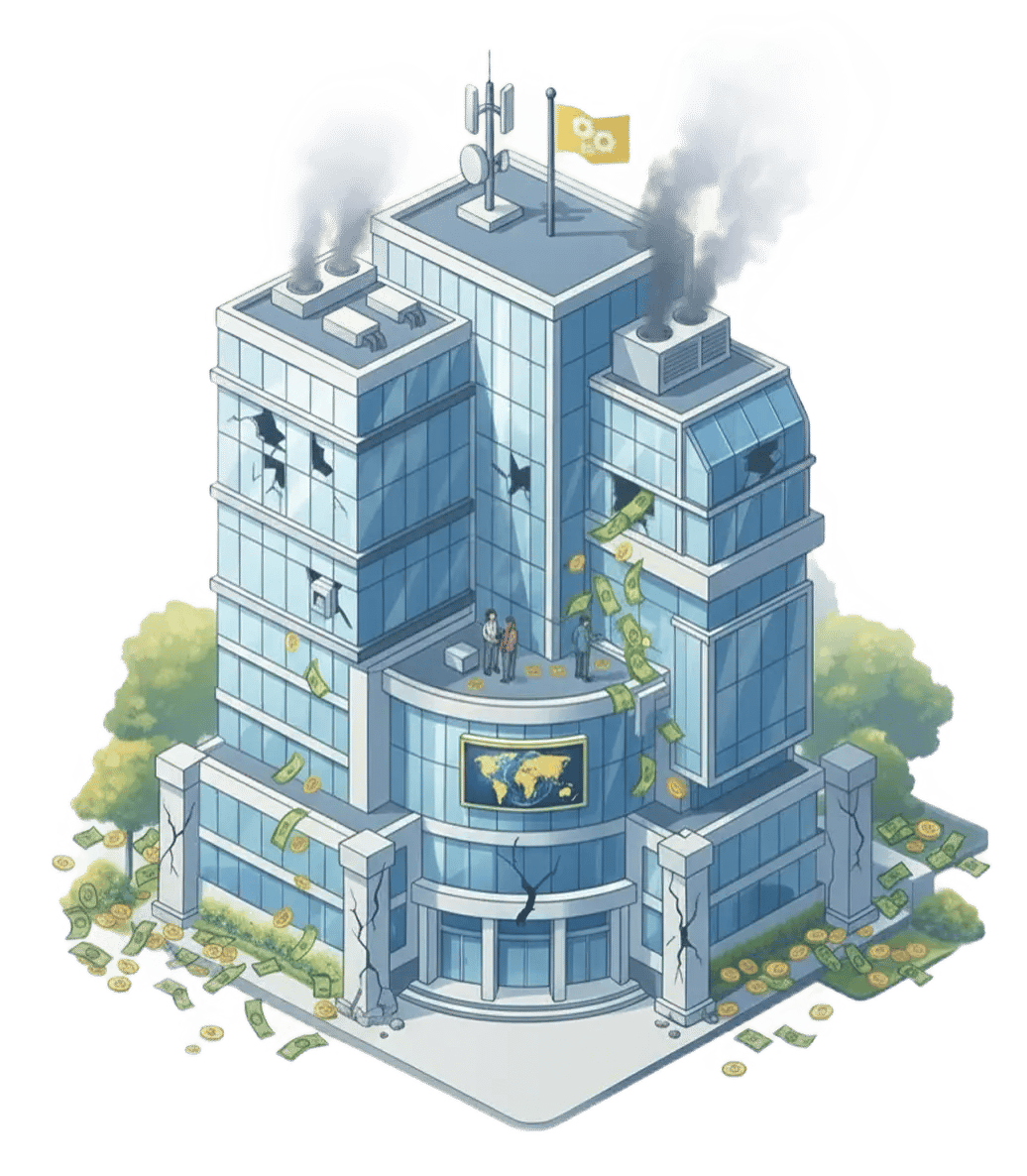


Change Management
Organizations struggle to manage resistance during change initiatives because they cannot identify the motivational dynamics behind that resistance. The same change message is interpreted differently by different people. Result: 70% of change programs fail.Change Management
Organizations struggle to manage resistance during change initiatives because they cannot identify the motivational dynamics behind that resistance. The same change message is interpreted differently by different people. Result: 70% of change programs fail.

Employee Engagement & Employer Brand
Employee value propositions and engagement programs are designed based on surveys and employee declarations — but actual motivation is never measured. Result: HR teams reach the conclusion that “no matter what we do, employees are not happy.”Employee Engagement & Employer Brand
Employee value propositions and engagement programs are designed based on surveys and employee declarations — but actual motivation is never measured. Result: HR teams reach the conclusion that “no matter what we do, employees are not happy.”
Recruitment & Promotions
Talent decisions eventually rely on intuition. Employee and leadership motivations are not systematically measured, and strategic talent decisions continue to rely on assumptions. Result: 75% of hires are wrong.
Managers
Managers try to manage team motivation based on personal experience and intuition. They cannot scientifically analyze why someone becomes motivated or loses motivation. Result: Increase in quiet quitting.
Change Management
Organizations struggle to manage resistance during change initiatives because they cannot identify the motivational dynamics behind that resistance. The same change message is interpreted differently by different people. Result: 70% of change programs fail.
Employee Engagement & Employer Brand
Employee value propositions and engagement programs are designed based on surveys and employee declarations — but actual motivation is never measured. Result: HR teams reach the conclusion that “no matter what we do, employees are not happy.”
The Hidden Costs Of These Problems

Performance Cost
Motivation mismatch can remain hidden in the short term — employees may still perform temporarily. However, productivity gradually erodes. Research shows that managers spend 17% of their time — nearly one full working day per week — managing low-performing employees. Robert Half International, 2012 — Survey of 1,400+ CFOs

Cultural Cost
Employees hired or placed in roles without understanding their motivations lead organizations to invest in engagement programs, events, recognition systems, and cultural transformation projects. However, because employees’ fundamental motivations are unknown, most initiatives fail to create lasting impact. Gallup State of Work, 2025 — Global engagement %21

Strategic Cost
Motivation is the invisible component behind every strategic decision. Whether it is training investments, change initiatives, or new programs — if the motivations of the people responsible for executing them are not considered, the strategy will fail. Research shows: 67% of well-designed strategies fail due to poor execution and 60% of organizational resources are wasted due to lack of strategic alignment HBR, 2017
If These Problems Continue
10 Days
Both the employee and employer sense the first signals of mismatch. The employee may remain silent while trying to survive in the role. The foundations of quiet quitting begin to form.
10 Months
HR retention efforts may fail. Some employees realize only after joining that the role is not suitable for them. The workplace becomes a trial-and-error environment. Recruitment costs increase — and the process begins again with a new candidate.
10 Years
The company never identifies the root cause of its people-related challenges. If the company operates in a profitable industry with strong brand recognition, the system may continue despite inefficiencies. Organizational myths begin to emerge: “There are no good candidates in the market.” “Gen Z is lazy.” and “We tried everything.” The company assumes the problem lies with people — rather than within its own systems.
What Competency Is Required To Solve This?

Motivation
Understanding the Science
Without understanding the science of motivation, understanding people becomes extremely difficult. Professor Steven Reiss’s research began with one question: “What motivates people?” The answer: 16 basic desires. Everyone possesses these desires, but each individual wants them in different intensities. This difference is what makes each person unique.
Using the Reiss Motivation Profile methodology, you can identify which needs a person values most — and understand the real motivations behind their behavior.
What Is This Program?
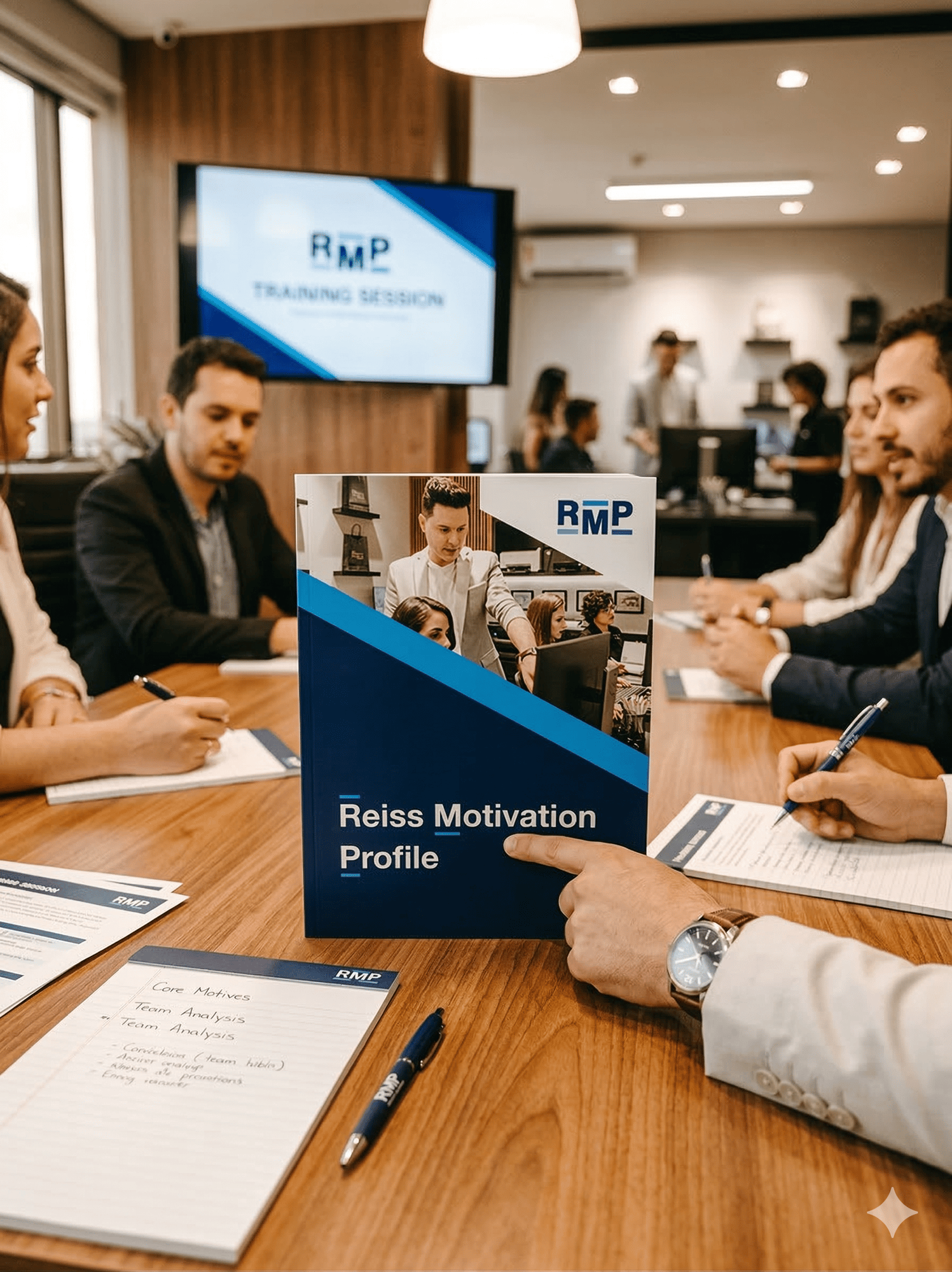
RMP Mastery Training (Certification) is an international certification program that enables professionals to apply Professor Steven Reiss’s scientific theory, The Science of Motivation®, in practice.
Through this program, HR professionals and leaders learn how to integrate the Reiss Motivation Profile (RMP) into key organizational processes, including recruitment, HR business partnering, learning and development, leadership development, strategic decision-making, performance management, team building, change management, customer and product decisions, as well as sales and service processes.

RMP Profile
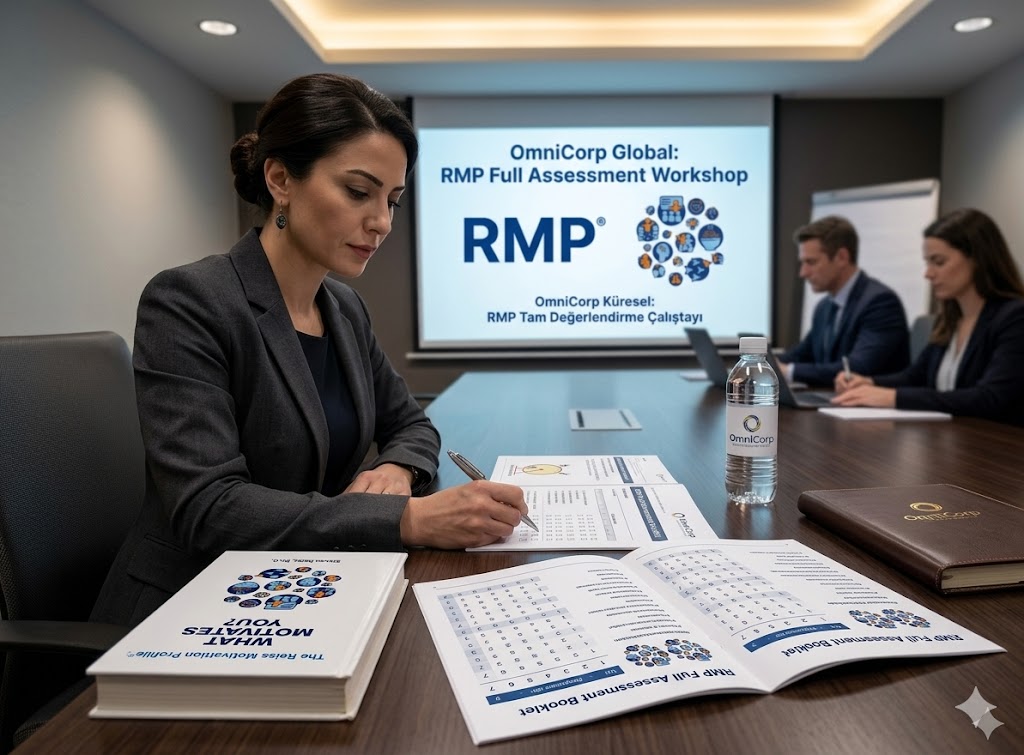
Participants complete their 128-question motivation profile before the program and review it with an expert.
Mastery Training
Minimum 20 hours of certification training covering the 16 basic desires, theoretical principles, profile interpretation, and feedback skills. Maximum 15 participants.
Certification
Successful participants receive the internationally recognized Reiss Profile® Master certification and gain the right to independently apply RMP for Business.
Learning Outcomes

Participants earn the internationally recognized Reiss Profile® Master certification.
They gain the right to independently purchase and apply RMP for Business.
Motivation–role alignment can be evaluated during recruitment processes, reducing wrong hires and early turnover.
Internal HR decisions (training investments, promotions, rotations, team formation) can be based on scientific data.
Leadership and career coaching can be built on motivation profiles.
Motivational balance can be established when forming teams, increasing synergy and reducing conflicts.
Employee engagement analysis and EVP design can be based on motivation data.
Sources of resistance in change initiatives can be identified at the motivational level.
Who Is It For?
 Suitable For
Data-driven organizations
Companies seeking to improve recruitment quality and success
Organizations that want to base talent decisions on scientific data
Leaders who want to diagnose employee issues at the motivational level
Organizations that want to make training investments based on data (if the motivation for curiosity is low, training investments may be ineffective)
Companies aiming to identify the root causes of employee engagement issues using the science of motivation
Organizations that want to design their Employee Value Proposition (EVP) using real motivation data
Leaders who want to manage their team’s motivation and performance more realistically
Organizations that want to understand and manage resistance to change at the motivational level
Leaders who want to manage Generation Z based on science rather than stereotypes
Professionals with at least 3 years of HR or leadership experience
Companies planning to integrate RMP into corporate processes
 Not Suitable For
Organizations focused on maintaining the status quo and unwilling to change habits
Structures without a data-driven decision-making mindset
Organizations without a culture of analyzing issues through the practice of problem → root cause → solution
Companies that are aware of people-related problems but continuously postpone addressing them
Organizations that know they lack role-appropriate leaders but choose to ignore the issue
Leaders who prefer labeling generations instead of learning how to lead Generation Z effectively
Organizations without a culture that supports transparent, data-driven discussions about leadership performance
Managers seeking quick results without dedicating time to learning new tools
Organizations that do not intend to integrate motivation data and methodology into their decisions
HR functions that do not believe in measuring motivation and consider traditional competency tests sufficient
Urgent
Why Now?
Adapting to Artificial Intelligence
AI is not only a technological shift for organizations but also a human, change management, and adaptation process. Managing this transformation without understanding employee motivations significantly increases the likelihood of failure.
AI Accelerates but Also Blinds
AI accelerates recruitment processes — but hiring the wrong candidate faster increases the cost. Algorithms cannot detect motivational mismatch; RMP can.
Generation Z Has a Lower Tolerance for Misalignment
Generation Z is the least tolerant generation when it comes to motivational mismatch. Turnover rates within the first 18 months are nearing peak levels — and this trend continues to accelerate.
The Engagement Crisis Is Real
Gallup 2025 reports global employee engagement at 21%. Without scientific tools to measure motivation, HR leaders cannot reverse this trend, and quiet quitting will continue.
The Competitive Advantage Window Is Open
The number of RMP Masters in Turkey is still limited. HR professionals who obtain certification today will acquire capabilities that competing companies may only seek to develop years later.
Customer Voice


“Our HR team received excellent training on identifying people’s motivations and using this valuable data in recruitment, coaching, and employee engagement initiatives. The ‘Who Am I?’ inventory and training have provided outstanding support in managing our HR functions.”
—Bilgen Çağlı
ÇİMSA, Deputy General Manager of HR
Related Solutions
.jpg?width=668&height=1024&name=unnamed%20(17).jpg)
Program Details

RMP (Reiss) — IDS Publishing Corporation
Partner
RMP Mastery Training (Certification)
Product Name
MOTG | TALS | PERC
Challenge Codes
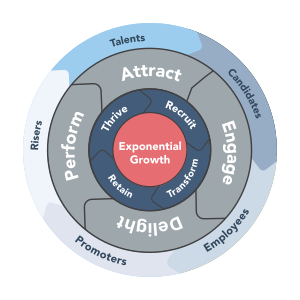
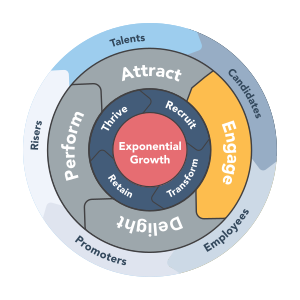
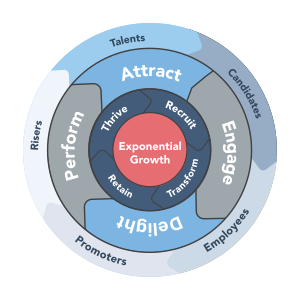
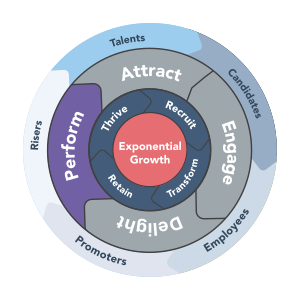
DELIGHT
Flywheel
HR Professionals, L&D Professionals, Talent Teams, Coaches, Change Managers, Team Managers
Target Audience
Min 8 — Max 16
Participants
2 Days / Minimum 20 Hours
Duration
In-Person — Live Online
Delivery Format
TR / EN
Language Options
Pre-Assessment
Not Available
Customization
Optional
RMP 128Q Motivation Profile
Assessment Tool
Pre-Work
Not Available
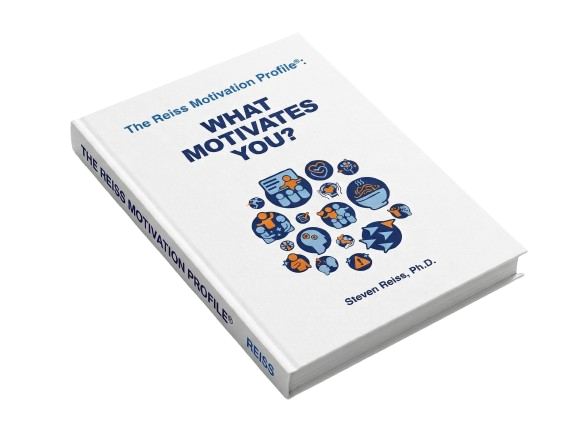
What Motivates You? (Prof. Reiss, 2024)
Training Kit
Gamification
Available
Reiss Profile® Master — Internationally Recognized
Available
Awards
Available
Additional Resources
Available
Post-Training Reinforcement
Available
ROI Measurement
Optional
Crucial Influence®
Follow-Up Program