






Only 10% of the money invested in corporate training produces real results. Only 12% of employees apply what they learn in training to their work.
-Skillademia, 2025 | McKinsey

DID YOU
KNOW?
Human motivation
 Urgent
Learning design has two core components
Competence
Can they do the job?
Motivation
Do they want to do it?

Providing training to an employee who lacks curiosity and motivation is like trying to fill an empty container with water. You cannot add something from the outside — if there is no internal desire.
Common Problems Many Organizations Face
L&D teams are doing their best — but they often operate with the same blind spot:


Learning & Development Cycle
Needs analysis is conducted based on competency gaps, while motivation gaps are rarely considered. Employees with different motivational drivers are given the same learning experience. After training ends, organizations ask "Why didn’t the behavior change?" But the answer is searched for in the wrong place: not in the content, format, or trainer. The reality is that behavioral change requires motivational alignment. You can provide a highly motivated, curiosity-driven employee with a deep 2-day learning program. But you cannot keep someone with low motivation engaged in a chair for even 2 hours. Result: The right content, wrong person — high participation, zero behavior change.Learning & Development Cycle
Needs analysis is conducted based on competency gaps, while motivation gaps are rarely considered. Employees with different motivational drivers are given the same learning experience. After training ends, organizations ask "Why didn’t the behavior change?" But the answer is searched for in the wrong place: not in the content, format, or trainer. The reality is that behavioral change requires motivational alignment. You can provide a highly motivated, curiosity-driven employee with a deep 2-day learning program. But you cannot keep someone with low motivation engaged in a chair for even 2 hours. Result: The right content, wrong person — high participation, zero behavior change.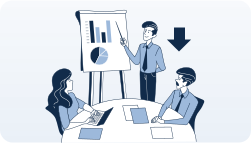
Leadership & Manager Development
Leadership programs are designed around competency frameworks. The same leadership program is delivered in the same way to leaders with different motivational profiles. A leader with a high need for power grows through responsibility and influence, while someone with a lower need for power may thrive through processes and collaboration. Without understanding this, leadership development becomes based on assumptions .Result: The training ends, but leadership behavior does not change.Leadership & Manager Development
Leadership programs are designed around competency frameworks. The same leadership program is delivered in the same way to leaders with different motivational profiles. A leader with a high need for power grows through responsibility and influence, while someone with a lower need for power may thrive through processes and collaboration. Without understanding this, leadership development becomes based on assumptions .Result: The training ends, but leadership behavior does not change.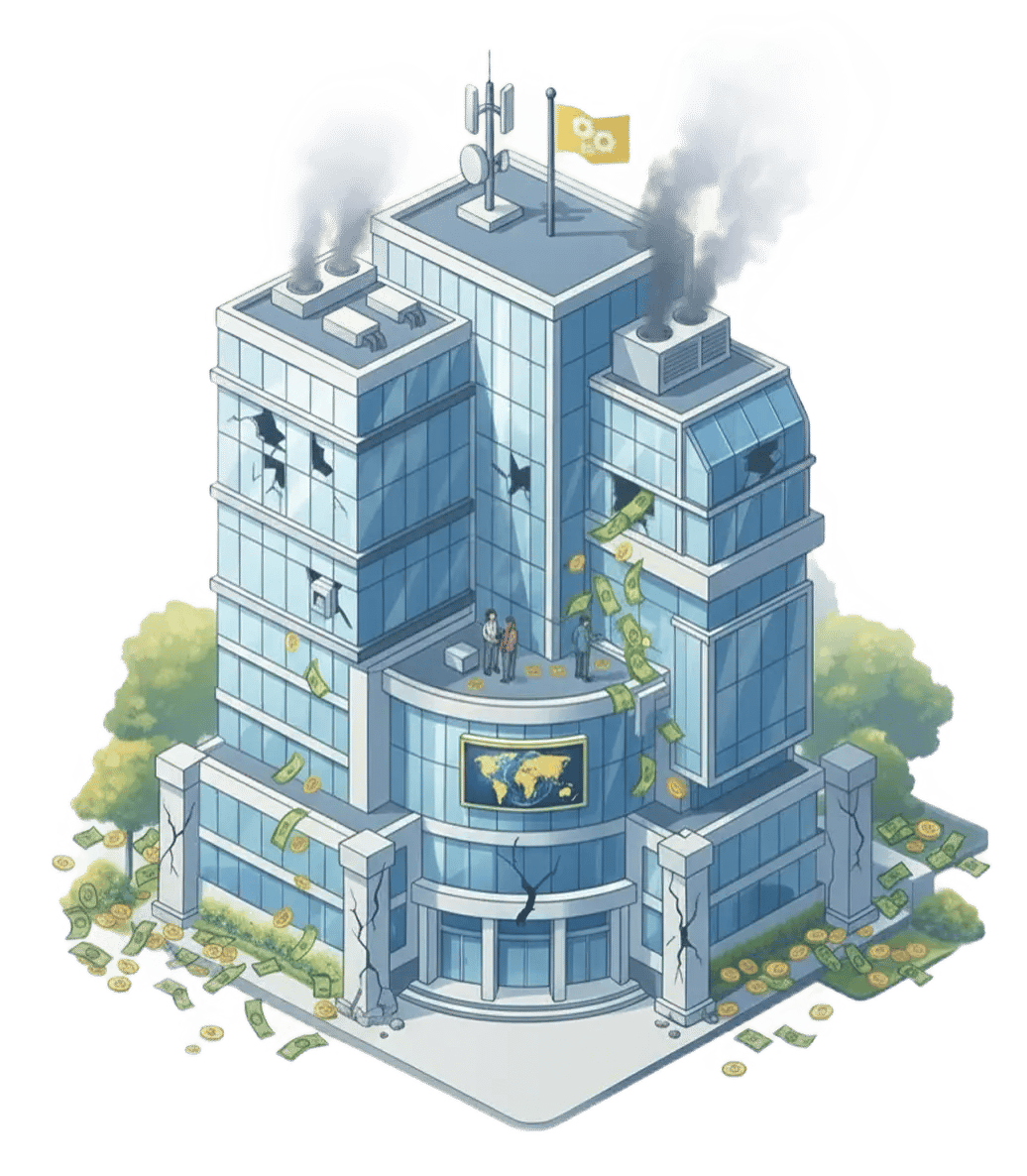


Conflict Management & Team Dynamics
Team members do not understand their own motivations — and they often do not understand each other’s motivations either. Behind most conflicts are differences in values, but this often goes unnoticed. When people’s motivations are unknown, tolerance decreases and misunderstandings increase. The same conflict continues to appear in different forms. Result: Team synergy cannot be created, and conflict management does not deliver lasting solutions.Conflict Management & Team Dynamics
Team members do not understand their own motivations — and they often do not understand each other’s motivations either. Behind most conflicts are differences in values, but this often goes unnoticed. When people’s motivations are unknown, tolerance decreases and misunderstandings increase. The same conflict continues to appear in different forms. Result: Team synergy cannot be created, and conflict management does not deliver lasting solutions.

Career Development & Coaching
Career plans are built around skills and performance. Promotions are often based on the question: "Can this person do the job?" But the question: "Is this role aligned with this person’s motivations?" is rarely asked. When managers coach, they often view employees through their own motivational lens — guiding them based on their own values rather than the employee’s motivational drivers. Result: The right person in the wrong role, or the right role with an unhappy person.Career Development & Coaching
Career plans are built around skills and performance. Promotions are often based on the question: "Can this person do the job?" But the question: "Is this role aligned with this person’s motivations?" is rarely asked. When managers coach, they often view employees through their own motivational lens — guiding them based on their own values rather than the employee’s motivational drivers. Result: The right person in the wrong role, or the right role with an unhappy person.
Learning & Development Cycle
Needs analysis is conducted based on competency gaps, while motivation gaps are rarely considered. Employees with different motivational drivers are given the same learning experience. After training ends, organizations ask "Why didn’t the behavior change?" But the answer is searched for in the wrong place: not in the content, format, or trainer. The reality is that behavioral change requires motivational alignment. You can provide a highly motivated, curiosity-driven employee with a deep 2-day learning program. But you cannot keep someone with low motivation engaged in a chair for even 2 hours. Result: The right content, wrong person — high participation, zero behavior change.
Leadership & Manager Development
Leadership programs are designed around competency frameworks. The same leadership program is delivered in the same way to leaders with different motivational profiles. A leader with a high need for power grows through responsibility and influence, while someone with a lower need for power may thrive through processes and collaboration. Without understanding this, leadership development becomes based on assumptions .Result: The training ends, but leadership behavior does not change.
Conflict Management & Team Dynamics
Team members do not understand their own motivations — and they often do not understand each other’s motivations either. Behind most conflicts are differences in values, but this often goes unnoticed. When people’s motivations are unknown, tolerance decreases and misunderstandings increase. The same conflict continues to appear in different forms. Result: Team synergy cannot be created, and conflict management does not deliver lasting solutions.
Career Development & Coaching
Career plans are built around skills and performance. Promotions are often based on the question: "Can this person do the job?" But the question: "Is this role aligned with this person’s motivations?" is rarely asked. When managers coach, they often view employees through their own motivational lens — guiding them based on their own values rather than the employee’s motivational drivers. Result: The right person in the wrong role, or the right role with an unhappy person.
The Hidden Costs Of These Problems

Training Investment Cost
Motivation mismatch can remain hidden in the short term — employees may still perform temporarily. However, productivity gradually erodes. Research shows that managers spend 17% of their time — nearly one full working day per week — managing low-performing employees. Robert Half International, 2012 — Survey of 1,400+ CFOs

Cultural Cost
Engagement programs, EVPs, and recognition systems built without understanding employee motivations reflect assumptions rather than real needs. Differences go unnoticed, conflicts are misread, and low performance is blamed on willingness. With U.S. engagement at a 10-year low of 31% in 2024, culture investments need deeper motivation insights to create change. Gallup, 2024

Strategic Cost
People in roles misaligned with their motivations are less likely to understand and execute strategy. They show up, but lack engagement. Misaligned leaders create the same problem at higher levels. The challenge is not the strategy itself — it is the motivation and alignment of the people executing it. HBR | Kaplan & Norton, Balanced Scorecard
If These Problems Continue
10 Days
On the surface, everything appears normal. Trainings are being planned, programs are running, and engagement surveys are being distributed. No one is saying that something is wrong yet. Employees remain silent but they are trying to navigate roles, teams, and programs that were designed without understanding what truly motivates them. During the first 10 days, the situation appears stable. The problem remains invisible.
10 Months
Signals begin to emerge: training is completed but behavior doesn’t change, conflicts repeat, and promoted managers underperform. Engagement drops and strategies fail in execution because motivational alignment was never addressed. L&D keeps adding new programs, while the real cause remains hidden.
10 Years
The company may still grow, but over time, turnover, conflict, poor promotions, and ineffective development drain vast resources. With up to 60% of resources wasted due to misalignment, it spends years running with weights on its feet—fixing problems instead of progressing. High-potential talent leaves, and the hidden opportunity cost never appears on the balance sheet.
What Competency Is Required To Solve This?
Designing effective training decisions, career plans, coaching sessions, and engagement programs; hiring the right people, placing the right person in the right role, increasing tolerance between individuals, understanding the root causes of friction, creating the right solutions, and ensuring that people successfully deliver what is expected from them — all of these share the same foundation: understanding people correctly first.

Motivation
Understanding the Science
Prof. Dr. Steven Reiss’s 30+ years of research explored one question: “What drives people to take action?” The answer: 16 basic desires, experienced at different levels by each person. These differences shape how people learn, work, lead, and collaborate.
Through the Reiss Motivation Profile® methodology, organizations can measure individual motivations and build data-driven approaches to training, role design, coaching, and career development — understanding why people change or do not change beyond assumptions.
What Is This Program?
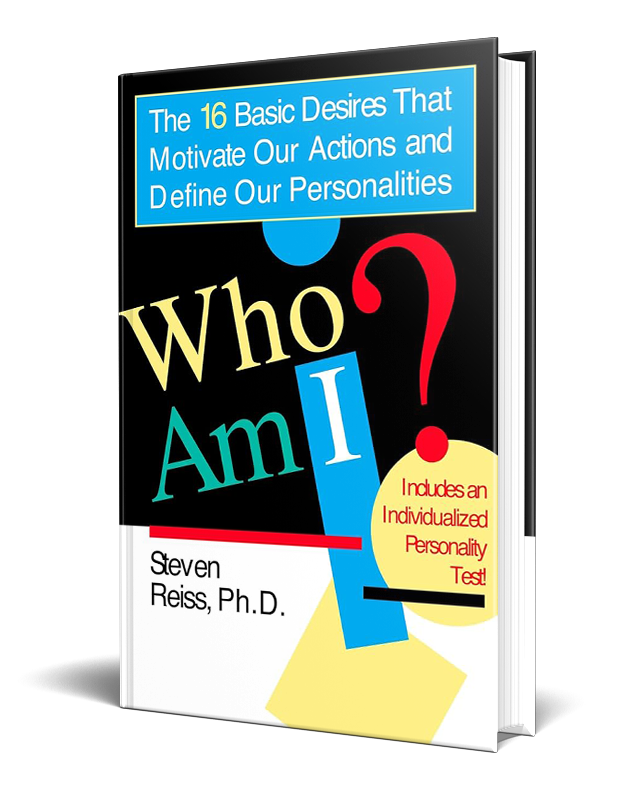
RMP Motivation Training — Who Am I is a motivation awareness program that transfers the scientific motivation theory developed by Prof. Dr. Steven Reiss, known as The Science of Motivation®, to employees and teams. The starting point of the program is two simple but transformative questions: “Who am I?” and “What motivates me?”
Throughout the program, participants first learn the 16 basic human desires that shape individual behavior. They then discover their own motivation profiles — understanding their high and low motivational needs. Finally, they explore how these motivations manifest within teams and how differences can be transformed into strengths.

RMP Profile
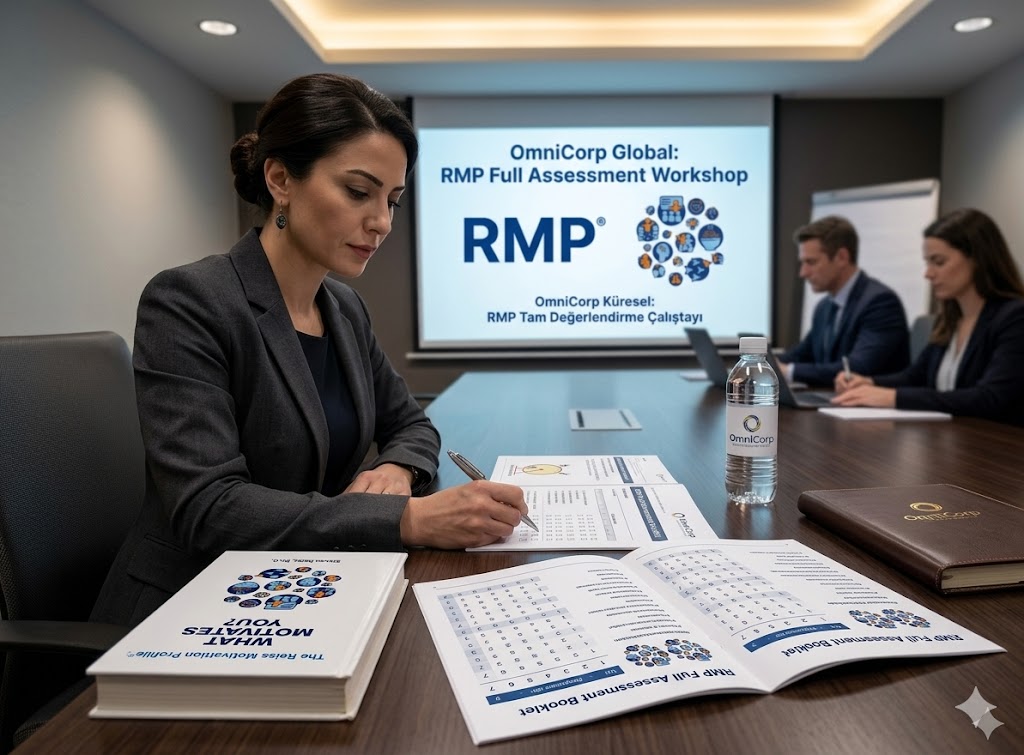
Participants complete the 128-question Reiss Motivation Profile® inventory. Results reveal individual motivations and answer the question: “Who am I?”
Who Am I Training
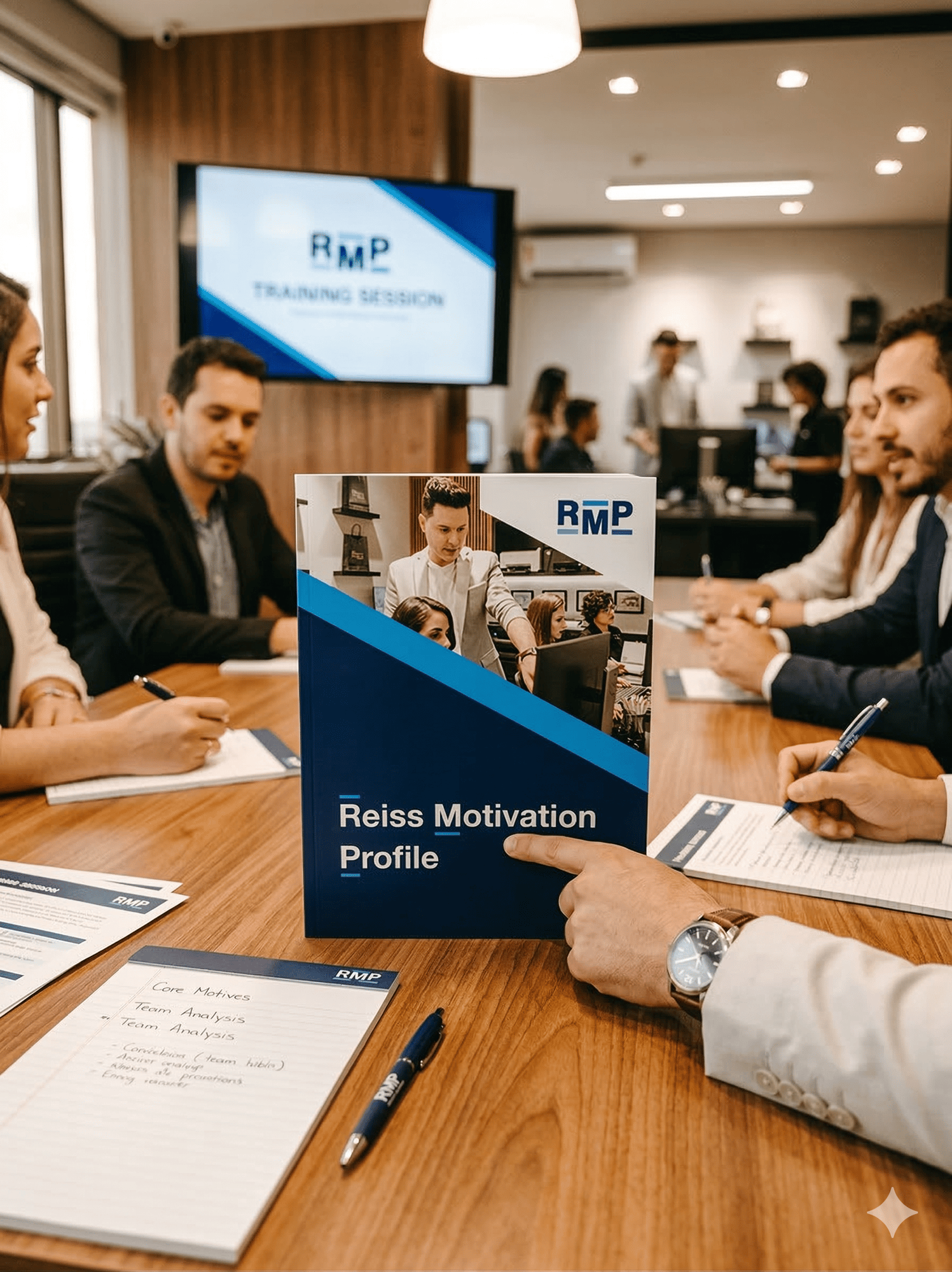
A full-day interactive session exploring the 16 basic desires, motivation, personality, and team dynamics. Maximum 16 participants.
Team Motivation Map
The team’s motivational profile is visualized to reveal strengths, friction points, and collaboration opportunities.
Case Videos & Reinforcement
Real business cases help participants apply learning and create lasting behavioral change.
Learning Outcomes

Increased self-awareness — understands who they are and what motivates them
Stronger self-acceptance — sees differences as individuality rather than weaknesses
Learns to make decisions aligned with personal motivations
Better understanding of other team members, leading to increased tolerance
Greater sense of meaning and satisfaction at work
Team members understand each other’s motivations, reducing misunderstandings
Conflicts are interpreted as differences in values rather than personality issues
Conflicts are interpreted as differences in values rather than personality issues
Tasks can be distributed based on individual motivational drivers
Stronger team synergy and collaboration
Reduced internal conflict and increased productivity
Training and development decisions are based on motivational data
Right person is placed in the right role, strengthening promotion decisions
Managers lead and coach employees according to their motivational profiles
Employee engagement and experience design becomes data-driven
Reduced turnover and lower costs related to hiring and talent loss
Who Is It For?
 This program is suitable for
HR and L&D professionals who want to understand employee motivation and integrate it into learning and development decisions
Managers who aim to strengthen team dynamics, reduce conflict, and increase synergy
Employees who want to discover their own motivations and find greater meaning in their work
Newly formed or restructuring teams
Teams experiencing engagement or performance challenges
Organizations that want to base career planning and promotion decisions on motivational data
 This program is not suitable for
Organizations focused on maintaining the status quo and applying a one-size-fits-all approach instead of managing individual differences
Organizations without a data-driven decision-making mindset
Companies that recognize people-related issues but continuously postpone taking meaningful action in order to preserve existing structures
Structures that are aware that certain roles do not align with individuals’ motivations but choose to ignore it
Organizations seeking quick results without allocating time for awareness and transformation
Those not planning to integrate motivational data and methodology into their decision-making processes
HR and L&D functions that do not believe in motivational measurement and consider traditional competency analysis sufficient
Urgent
Why Now?
AI Transformation is Amplifying the Human Problem
AI transforms business, but without understanding motivation, organizations cannot predict who will embrace or resist change.
Gen Z Does Not Tolerate Motivational Misalignment
Gen Z leaves jobs and cultures that do not align with their motivations. Without understanding what drives them, onboarding, development, and engagement programs fail to retain them..
The Engagement Crisis Is Deepening
Gallup 2025: Global employee engagement is 21%. Despite rising investments, results remain unchanged because programs without motivational data rely on guesswork. Quiet quitting continues to grow.
Pressure on L&D to Prove Value is Increasing
L&D teams face growing pressure to prove training ROI. Without motivational data, programs rely on assumptions. The science of motivation helps transform L&D from a cost center into a value creator.
Customer Voice


“Our HR team received excellent training on identifying people’s motivations and using this valuable data in recruitment, coaching, and employee engagement initiatives. The ‘Who Am I?’ inventory and training have provided outstanding support in managing our HR functions.”
—Bilgen Çağlı
ÇİMSA, Deputy General Manager of HR
Related Solutions
.jpg?width=668&height=1024&name=unnamed%20(17).jpg)
 Assessment | MOTG · EXG
RMP for Culture Analysis
Organizational culture–motivation mapping
PTP | TALS
RMP Mastery for Talent Managers
RMP expertise and certification program for HR and Talent teams
PTP | MOTG
RMP Team Motivation Training
Advanced program addressing team motivation dynamics in depth
Program Details

RMP Motivation Training — Who Am I
Product Name
RMP (Reiss) — IDS Publishing Corporation
Partner
MOTG
Challenge Code
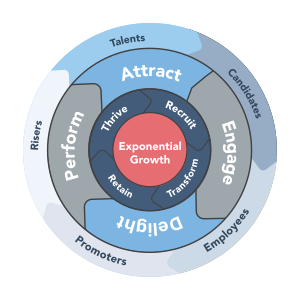
DELIGHT
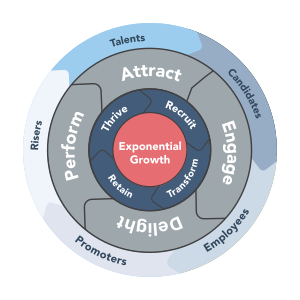
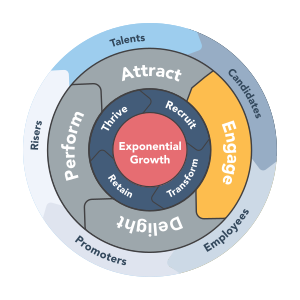
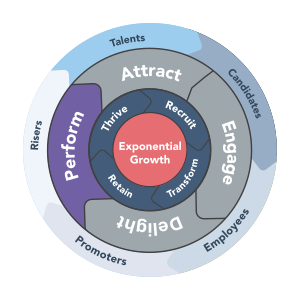
Flywheel
All employees, teams, managers
Target Audience
Min 8 — Max 16
Participants
1 Day
Duration
In-Person — Live Online
Delivery Format
TR / EN
Language Options
Pre-Assessment
Not Available
Customization
Not Available
RMP 128Q Motivation Profile
Assessment Tool
Pre-Work
Yes
Training Kit
Available
Gamification
Available
Certification
Not Available
Reward
Not Available
Additional Resources
Available
Post-Training Reinforcement
Optional
ROI Measurement
Optional
RMP Team Motivation Training — RMP Mastery Training
Follow-Up Program