Leading Strategy and Innovation

While your leaders are consumed by day-to-day operations, who is shaping your company's future?

Organizations hold strategy meetings and develop ambitious plans—but the smartest people in the room are still putting out yesterday's fires. The mental space, bandwidth, and tools needed to shape the future are either nonexistent or have not been systematically developed among most leadership teams.
flash-yellow
flash-yellow

DID YOU
KNOW?

training-data-vector

9%

Only 9% of managers are able to operate effectively in both strategic and operational modes. The remaining 91% are completely bogged down in operational tasks.

Conclusion: It’s not that companies aren’t developing strategies—they’re failing to develop leaders who can think strategically and implement those strategies.

Trending Down Schulich ExecEd Career Mobility & Skills Report, 2024

Common Problems Many Organizations Face

non-systematic work management no-systematic-work-management-hover
Because leaders are swamped with day-to-day operations, they have neither the time nor the mental bandwidth for strategic thinking. Since strategy isn’t “urgent,” it’s constantly put off.
Decisions Made at the Meeting decisions-in-meeting-hover
Decisions are made at strategy meetings—but these decisions are not backed by systematic analysis, scenario planning, or competitive intelligence. A strategy driven by intuition quickly loses its relevance in a changing market.
organization-2
busy people busy-people-hover
Strategic decisions are made in meetings, but they are rarely supported by systematic analysis, scenario planning, or competitive intelligence.
peoples-head people-head-hover
Strategy remains at the top management level and is not effectively communicated to middle management and employees. Everyone is working on different priorities—resulting in chaos rather than coordination.
non-systematic work management no-systematic-work-management-hover
Because leaders are swamped with day-to-day operations, they have neither the time nor the mental bandwidth for strategic thinking. Since strategy isn’t “urgent,” it’s constantly put off.
Decisions Made at the Meeting decisions-in-meeting-hover
Decisions are made at strategy meetings—but these decisions are not backed by systematic analysis, scenario planning, or competitive intelligence. A strategy driven by intuition quickly loses its relevance in a changing market.
busy people busy-people-hover
Strategic decisions are made in meetings, but they are rarely supported by systematic analysis, scenario planning, or competitive intelligence.
peoples-head people-head-hover
Strategy remains at the top management level and is not effectively communicated to middle management and employees. Everyone is working on different priorities—resulting in chaos rather than coordination.

The Hidden Costs of Problems

trend-down-1

Performance Cost

CEOs spend 47% of their time on issues with a time horizon of less than one year—while only 16% is dedicated to long-term strategy. Leaders who have not developed their strategic thinking skills remain bogged down in day-to-day operations. Source: PwC 29th Global CEO Survey

profile-2user-white

Cultural Cost

95% of employees are either unaware of the company’s strategy or do not understand it. An organization that does not know its strategy cannot implement it—the belief that “strategy doesn’t apply here” becomes ingrained in the culture. Source: Kaplan & Norton, Harvard Business School

strategic-outcome

Strategic Cost

According to a McKinsey survey of 1,257 executives, the vast majority of companies are not tracking how their competitive advantages are changing. Over the past 10 years, competitive positions have been shifting rapidly in more than 60% of industries. Source: McKinsey Global Survey, 2025

If These Problems Persist

early-signals
10 DAYS

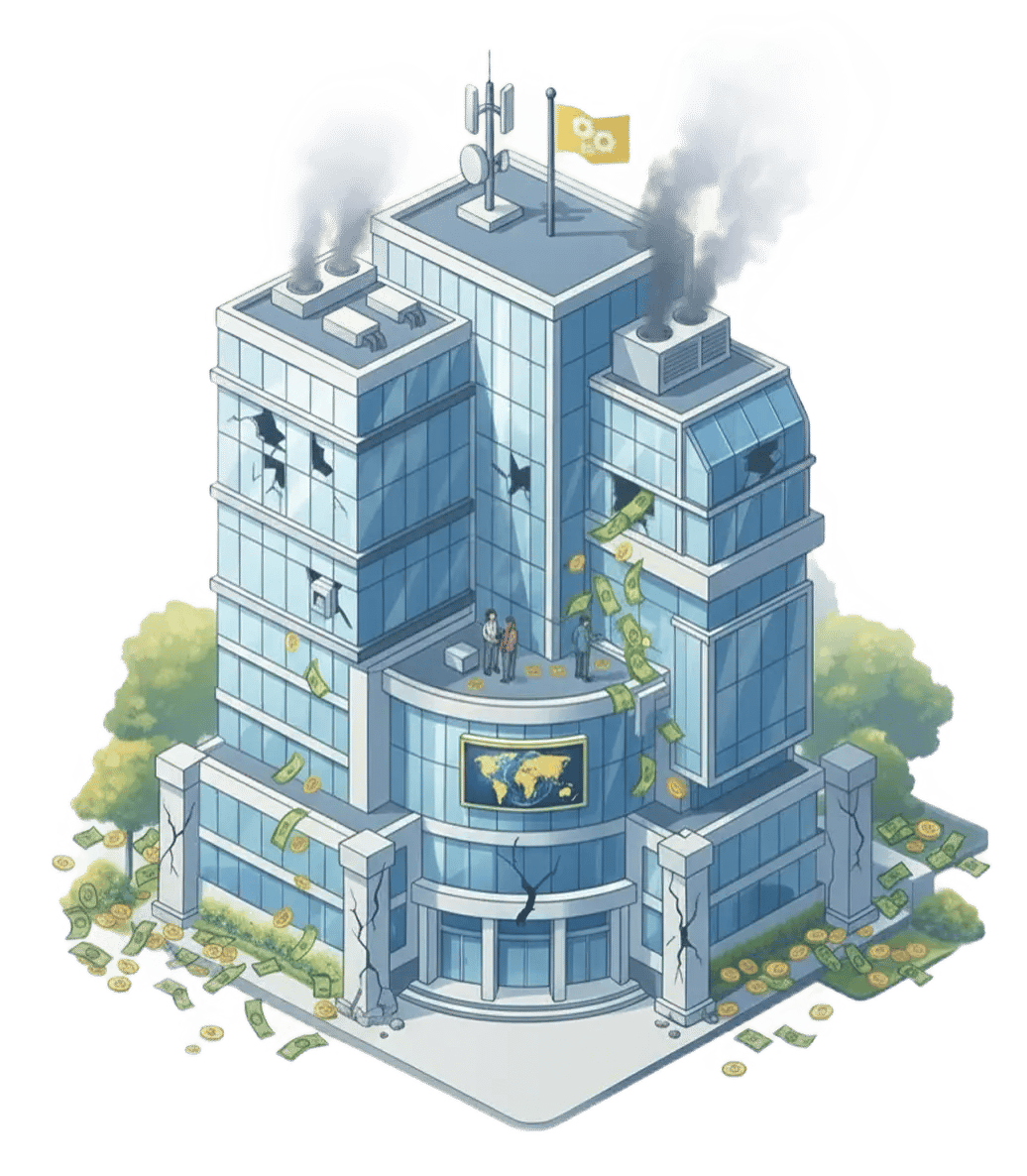
A strategy presentation is given at the board meeting. The slides are ready, the numbers are in place. But everyone in the room is hesitant to ask the same question: “Can we really implement this strategy?” Some think to themselves, “This strategy doesn’t suit us”—but no one says it out loud. The meeting ends, everyone returns to their tasks—the rhythm of operations continues. The strategy document is filed away. “Let’s get started,” someone says. But nothing happens.

cultural shift
10 MONTHS

Strategy is still “on the agenda”—but it’s no longer anyone’s priority. If employees were asked about the strategic priorities set at the beginning of the year, most would be unable to answer; because the strategy has either been communicated to employees too late, incompletely, or not at all. Leaders, meanwhile, have set the strategy aside while pursuing their own departmental goals. Implementing the strategy is like pulling into the pits at 300 km/h to change the engine components—the strategy is put on hold so as not to miss the current target. By the end of the year, the targets may be met—but the gears are either overheated or broken. Because the strategy wasn’t implemented that year, it becomes harder to implement the following year; the likelihood of a delayed or improperly timed strategy being successfully implemented diminishes over time. Short-term gains turn into long-term losses. The leader saves the day—but puts the company’s future at risk.

structural damage
10 YEARS

The organization has become blind to the word “strategy.” Strategy no longer carries any meaning beyond being a buzzword in *Harvard Business Review* or business books. In 360-degree leadership feedback surveys, items such as “developing strategy,” “implementing strategy,” and “devoting more time to strategy than to operations” have become the areas where leaders receive the lowest scores. Every new discussion of strategy is met with a “here we go again” attitude—because none of them have ever been implemented. Competitors have reshaped the market, and new players have entered the scene. The company is still standing—but it’s struggling to survive through reactive decisions. It is not the “strategy execution muscle” that has atrophied, but the “strategic thinking muscle” itself. In other words, muscle has been lost—and regaining that muscle takes much longer than never losing it in the first place.

What Competency Is Needed To Solve This?

HelpCircle

Strategic Leadership and Implementation

Capacity

The leadership capability to anticipate the future, design effective strategies, and execute them consistently across every level of the organization.

Without this capacity, strategy remains merely a presentation—operations always win out. Operational culture eats strategy for breakfast.

What is this Program?

Leading Strategy and Innovation is a three-day intensive leadership program designed to  reactivate and strengthen the strategic thinking and innovation capabilities of senior leadership teams.

Far removed from traditional leadership and strategy training, this program has been updated and designed to develop the next generation of leaders needed in a world reshaped by artificial intelligence and technology.

Leaders work not with theoretical frameworks, but on the current and real strategic challenges facing their own companies—and return to their organizations with a concrete strategy and innovation plan.

Offered under the SuccessProgramme Leadership OS™ umbrella, this program represents the strategic pinnacle of the 7-Level Leadership Development System.

depositphotos_320013256-stock-photo-a-group-of-Caucasian-people-1

What Will You Learn?

Defining the future within the framework of the mission, vision, and BHAG—and aligning the organization with that vision

The difference between strategic thinking and operational thinking; as a leader, which mode to use and when to use it

Mapping the evolving competitive landscape—seeing not just today’s competitors, but the players who will reshape the game tomorrow

Analyzing artificial intelligence, technology, and geopolitical factors within the PESTAI framework and integrating them into strategy

Systematically applying creative problem-solving and innovation techniques—through scenario simulations that turn ideas into reality

Identifying the gap between strategy and execution (the Strategy Execution Gap)—why this gap arises, how to measure it, how to disseminate it throughout every level of the organization, and how to monitor it

Aligning the strategy with financial priorities and fostering ownership by communicating it to every level of the organization

At the end of the program, each participant leaves with a prioritized strategic roadmap tailored to their own company.

Learning Outcomes


training-learning-vector
checkmark_icon
They develop the mental framework needed to strike a balance between operations and strategy—and begin to distinguish which mode to work in and when
checkmark_icon
Instead of making decisions based on intuition, they begin to use systematic strategic analysis tools
checkmark_icon
It begins to view the competitive ecosystem from a broader perspective—identifying opportunities and threats that could reshape the market at an earlier stage
checkmark_icon
Develops a concrete perspective on how to position artificial intelligence and technology as a strategic tool
checkmark_icon
Participants learn the communication and ownership strategies needed to embed the strategy at every level of the organization
checkmark_icon
You will be able to identify the Strategy Execution Gap and determine a concrete starting point for closing it
checkmark_icon
Acquires the techniques and mental habits necessary to manage innovation as a systematic process

Who Is It For?

tick-circle-green Appropriate
Senior leaders and CEOs responsible for setting the company's strategic direction
Leadership teams who realized that strategy meetings were being held but never actually put into practice, and who wanted to change that
Leaders who view artificial intelligence and technological transformation as an opportunity rather than a strategic threat
Leaders who want to foster ownership of the strategy not only among top management but at all levels of the organization
Teams that want to turn innovation into a systematic process rather than leaving it to moments of inspiration
CEOs who want to establish a common strategic language and alignment on priorities within their leadership team
close-circle-yellow Not Appropriate
Managers who view strategy as someone else’s responsibility and see themselves as responsible only for operations
Managers who are focused on operations, guided by the belief that "in our industry, it's not strategy that matters, but speed"
Teams that limit their strategy work to the annual off-site meeting and do not follow up afterward
Those who view training not as a means of development, but as a way to "raise awareness" within the team
Leaders who are resistant to growth and wonder, "Will a single training session make me strategic?"
Leaders who are naturally inclined toward operational thinking, who are aware of this, and who are happy with it—this program is not for them
danger Urgent

Why Now?

Strategy cannot be developed at the last minute once things have gotten out of hand. Just as a person must set aside regular time each day for eating, resting, and sleeping—so too must leaders set aside regular and disciplined time for developing strategy and fostering innovation.

info-icon

If any of the following sound familiar, this training is right for you and your team:

If you are shouldering the burden of shaping the company's future strategy all by yourself

Your team isn't coming up with strategies—you're the one providing them

If your team is putting out today’s fires but no one is looking ahead to tomorrow,

Each department is pursuing its own goals—unless there is a common strategic direction

They talk about strategy, but it doesn't trickle down—if everyone understands it differently

If energy and resources are flowing not toward the most important strategic opportunities, but toward the noisiest projects,

If, after things have gone awry, last-minute tactics are presented to you as a strategy to get out of the situation,

If strategies that took months of hard work to develop get lost in the hustle and bustle of day-to-day operations, and by the end of the year people say, “We just couldn’t seem to put them into practice,”

If you asked your employees, "What are this year's most critical strategic priorities?"—and everyone in the room gave a different answer,

If your competitors have pulled ahead of you in certain areas through their strategic moves and the gap between you has widened,

If you don’t have a structured approach to artificial intelligence and technology strategies…

This training is tailored to you and your team.

Related Solutions

depositphotos_320023748-stock-photo-handsome-businessman-giving-a-speech-on Assessment

Strategy Execution Index (SEI)

Assess your company’s ability to execute strategy; identify gaps and priorities

business-first-thinking Consulting

From Strategy to Execution

Establish a systematic implementation framework that links strategy to operations

depositphotos_298983874-stock-photo-futuristic-robot-arm-touches-human Consulting

Future Design

Design your company’s strategic plan for the next 3–5 years

depositphotos_422551166-stock-photo-group-of-multiethnic-business-people-at-work Coaching

Strategic Thinking & Decision-Making Coaching

Develop your capacity for strategic thinking at the individual level

practice-tech-eco Program

Leading the AI Transformation

Integrate artificial intelligence into your company’s strategic transformation

depositphotos_420882828-stock-photo-a-manager-in-a-jacket Program

Leading Transformation

Implement strategic change at every level of the organization

Program Details

tag-2

Leading Strategy and Innovation

Program Name
tag-2

STRG-PTP-LSAI-SP-SXE-CEO-STR-PER-074

SKU
tag-2

SP (SP1 In-House)

Partner
tag-2

STRG

Challenge Code
tag-2

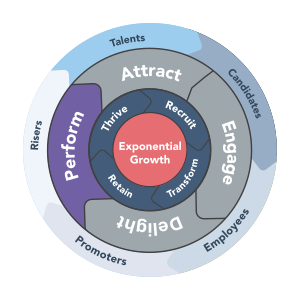
PERFORM

Flywheel
tag-2

Senior Executives, CEO, C-Suite

Target Audience
tag-2

Min 8 — Max 16

Number of Participants
tag-2

3 Days

Duration
tag-2

In Person · Live Online

Delivery Format
tag-2

TR / EN

Language
tag-2

Optional — Strategy Execution Index (SEI)

Preliminary Assessment
tag-2

Preliminary Preparation

Included
tag-2

Training Kit

Included
tag-2

Certificate

Included
tag-2

Post-Training Retention

Optional
tag-2

ROI Measurement

Optional
checkmark-circle-1 Recommended Training Sessions

Leading the AI Transformation

recommended-training-1
checkmark-circle-1 Recommended Training Sessions

Leading Transformation

recommended-training-1
checkmark-circle-1 Recommended Training Sessions

Leading Culture and the Workplace

recommended-training-1