







 WhatsApp
IBM found that the biggest barrier to successful change isn't technology—it's changing how people think and behave.

DID YOU
KNOW?
#1
 McKinsey, "Superagency in the Workplace" — January 2025
Common Problems Many Organizations Face
Organizations navigating constant change face the same challenges:


A change initiative is announced — employees may be technically ready, but mentally unprepared, leading to much stronger resistance than expected.
A change initiative is announced — employees may be technically ready, but mentally unprepared, leading to much stronger resistance than expected.


Negativity Bias is contagious: one person’s negative thinking pattern regarding change can disrupt the psychological climate of the entire team and paralyze decision-making.
Negativity Bias is contagious: one person’s negative thinking pattern regarding change can disrupt the psychological climate of the entire team and paralyze decision-making.
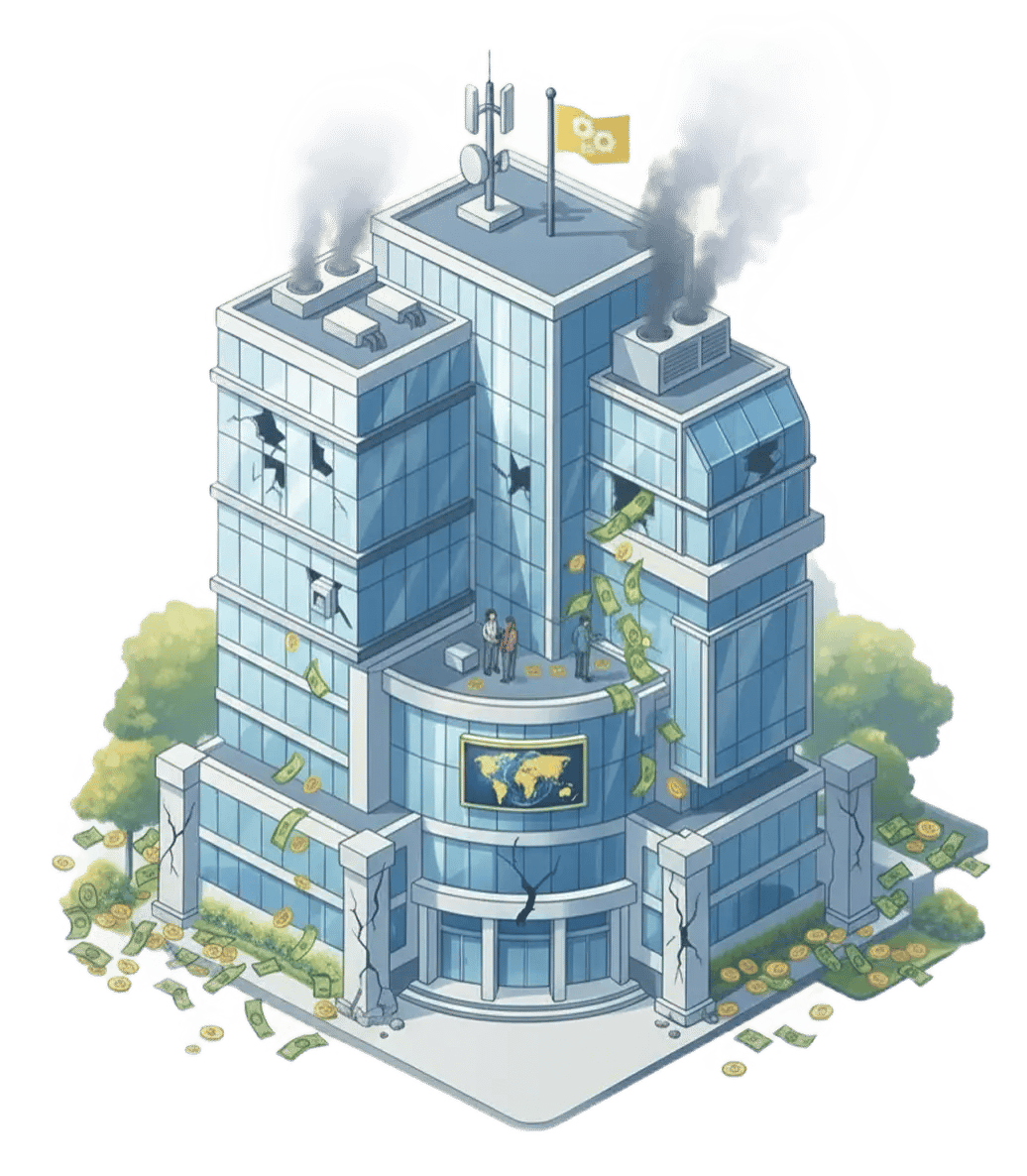


Employees rarely resist change openly. Instead, they delay, disengage, or quietly comply while giving minimal effort.
Employees rarely resist change openly. Instead, they delay, disengage, or quietly comply while giving minimal effort.
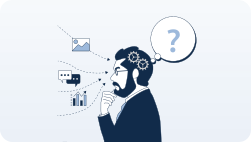
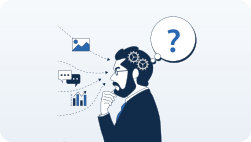
Resistance often appears as passivity rather than open opposition.
Resistance often appears as passivity rather than open opposition.
A change initiative is announced — employees may be technically ready, but mentally unprepared, leading to much stronger resistance than expected.
Negativity Bias is contagious: one person’s negative thinking pattern regarding change can disrupt the psychological climate of the entire team and paralyze decision-making.
Employees rarely resist change openly. Instead, they delay, disengage, or quietly comply while giving minimal effort.
Resistance often appears as passivity rather than open opposition.
The Hidden Costs Of These Problems

Performance Cost
Employees who lack an adaptive mindset fall 15% behind in taking appropriate action during change periods — precisely when decisive action is needed. (TRACOM, 322 learners, 3.500+ rater)

Cultural Cost
The proportion of employees ready to support change declined from 74% in 2016 to 38% in 2022.Organizations are gradually losing their adaptation capability. If an adaptive mindset is not developed, resistance to change becomes embedded in culture. (Gartner, Change Fatigue Research, 2022)

Strategic Cost
Human thinking evolves linearly, while technology progresses exponentially. According to Kurzweil’s Law of Accelerating Returns, this widening gap creates strategic risk for organizations. Fear is the primary driver of human decisions. Research shows that fear of loss is twice as powerful as hope of gain, which explains why 50–70% of corporate change initiatives fail.(Kurzweil, 2001 | Univ. of Bath & Waterloo, Cognitive Science, 2026 | TRACOM Whitepaper)
If These Problems Continue
If employees and leaders in your organization do not develop an adaptive mindset.
10 Days
Resistance rarely appears on day one. People nod in meetings, agree with the vision, and then quietly wait to see whether the change lasts. Momentum fades before implementation even begins.
10 Months
Resistance becomes visible through hesitation, disengagement, and delayed decisions. Employees may appear supportive while quietly slowing progress and avoiding accountability.
10 Years
When resistance becomes accepted, the status quo wins. Over time, innovation declines, adaptability weakens, and the organization becomes increasingly resistant to future change.
What Competency Is Needed To Solve This?

Change Agility
The capacity for mental agility and psychological resilience that enables individuals to maintain performance during periods of change and transform uncertainty into opportunity.
What Is This Program?
Adaptive Mindset® for Resilience is a scientifically grounded training program developed by TRACOM Group based on clinical psychology research. It transforms individuals’ mental responses to change and uncertainty. The program begins with a simple truth: The human brain is wired to focus on threats. This evolutionary mechanism — Negativity Bias — creates automatic thought patterns in modern workplaces that weaken performance, slow change, and hinder adaptation.
Adaptive Mindset® makes these patterns visible. Each participant identifies their primary Negativity Bias pattern, recognizes its triggers, and develops personalized strategies to overcome it. Result: A mindset that perceives change not as a threat but as an opportunity, and maintains performance even under pressure.
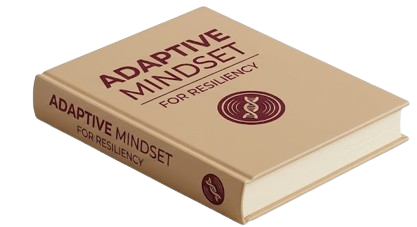


Resilience is the ability to leap forward despite difficulties — and to view challenges as opportunities for growth
TRACOM Group
Official Program Definition
Data Insight
Individuals with high adaptability influence others positively 21% more effectively during change and remain 14% more engaged under stress.
—TRACOM
Based on a study of 3,500+ raters
Learning Outcomes

Leaders emerge who positively influence their teams during change and maintain performance under stress
Awareness of the Negativity Trap increases — reactive responses decrease while proactive decisions increase
Resistance to change shifts from being a cultural problem to an individual development opportunity
Transformation initiatives deliver faster and more sustainable results through adaptive thinking
Who Is It For?
 Suitable For:
Organizations that view AI transformation not merely as a technology initiative but as a change management challenge, and want to address the human dimension effectively.
Organizations seeking to systematically strengthen change management capability.
Leaders who recognize that their projects have derailed due to resistance to change and want to address the root cause.
Organizations that previously experienced negative thinking patterns during change initiatives and want to develop those mindsets.
Companies that have undergone digital or structural transformation and want to manage future changes more effectively.
 Not Suitable For:
Organizations that believe they already manage the human dimension of change effectively.
Companies lacking leadership buy-in and seeking only a checkbox training program.
Organizations without a clear goal of solving adaptation challenges.
Structures that view psychological safety and investment in people as unnecessary.
 Urgent
Why Now?

A — AI Transformation
AI initiatives are not purely technological — without human adaptation, AI investments fail.No digital transformation can succeed without mental agility.
B — Generational Dynamics
Generation Z now represents a large portion of the workforce.They have little tolerance for rigid management styles, meaningless processes, and organizations that ignore personal development.
C — Speed of Customer Adaptation
Companies often believe customers resist change. In reality, customers adapt rapidly — sometimes appearing resistant before suddenly transforming.
D — Competition
Adaptive organizations gain advantage in the market.This is no longer a preference — it is a matter of survival.
Customer Voice
❝ During our reorganization process, my team became stronger instead of falling apart. The Adaptive Mindset training arrived at exactly the right time — our employees not only accepted change but began to lead it. ❞
Fortune 500 Company
HR Director
❝Thanks to the Resilience Navigator, development continued even after the training ended. Within the first 90 days, team discussions became more constructive and project delivery timelines shortened.❞
Steve Franklin
Director of Learning & Development — CoBank
Related Solutions
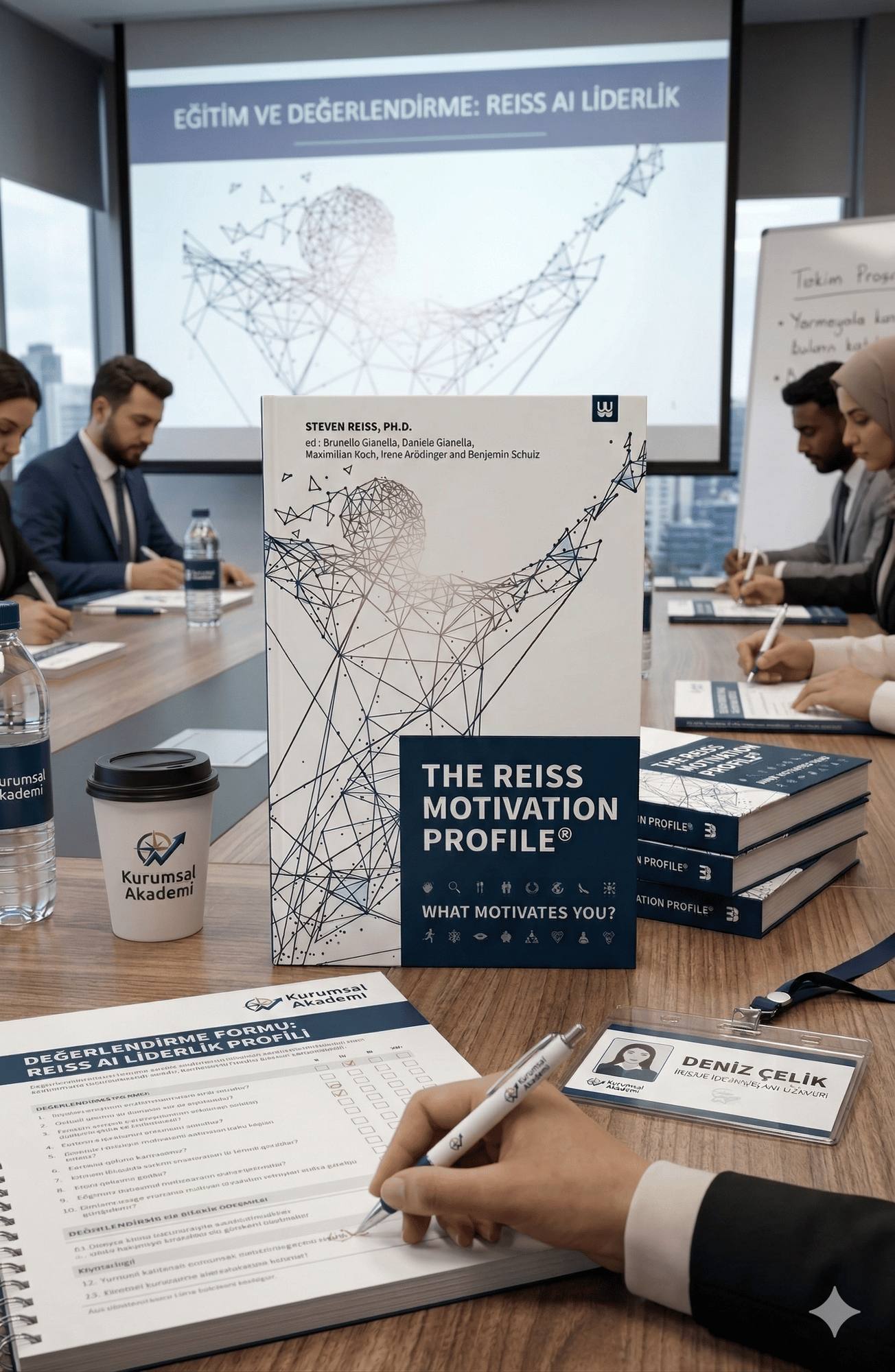 RMP (Reiss) | MOTG · ASS | SKU: RFCR
RMP for Change Readiness
Measures the motivational roots of a non-adaptive mindset and determines readiness for change.
.png?width=2000&height=2000&name=Gemini_Generated_Image_xv33d4xv33d4xv33%20(1).png)

Program Details

Adaptive Mindset® for Resilience
Program Name
TRACOM Group — The Social Intelligence Company®
Partner
RESC | LEC | LOWE | PERC | MOTG | LERG
Challenge Codes
DELIGHT
Flywheel
All Employees · Teams Affected by Change
Target Audience
Min 8 – Max 16
Participants
Half Day (4 Hours)
Duration
In-Person · Live Online
Delivery Format
TR / EN
Language Options
Optional — Change Readiness Assessment
Pre-Assessment
Customization
Not Available
Adaptive Mindset® Resilience Assessment (Self-Perception & Multi-Rater options)
Assessment Tool
Pre-Work
Optional
Workbook + Resilience Navigator (Post-Training Online Resource Library)
Training Kit
Gamification
Available
Certificate
Not Available
Awards
Available
Resilience Navigator · Research Reports · Whitepaper: The Case for Resiliency Training
Additional Resources
Optional — Resilience Navigator · Follow-up Coaching Sessions
Post-Training Reinforcement
ROI Measurement
Optional
Crucial Influence®
Recommended Follow-Up