






95% of leaders believe they are self-aware — but in reality, only about 10–15% truly are.

DID YOU
KNOW?

9 out of 10
 Source: Tasha Eurich, Harvard Business Review (2018)
Common Problems Many Organizations Face


Leaders are unaware of their own management styles — behaviors they believe are strengths may actually exhaust their teams.
Leaders are unaware of their own management styles — behaviors they believe are strengths may actually exhaust their teams.

Managers lead everyone through their own needs filter — failing to recognize that each team member has different needs. Situational leadership is missing.
Managers lead everyone through their own needs filter — failing to recognize that each team member has different needs. Situational leadership is missing.



70% of the decline in employee engagement is directly linked to the manager — the issue is not the employee, but the manager.
70% of the decline in employee engagement is directly linked to the manager — the issue is not the employee, but the manager.


57% of employees leave their manager, not the company — and an additional 32% are actively considering leaving because of their manager.
57% of employees leave their manager, not the company — and an additional 32% are actively considering leaving because of their manager.
Leaders are unaware of their own management styles — behaviors they believe are strengths may actually exhaust their teams.
Managers lead everyone through their own needs filter — failing to recognize that each team member has different needs. Situational leadership is missing.
70% of the decline in employee engagement is directly linked to the manager — the issue is not the employee, but the manager.
57% of employees leave their manager, not the company — and an additional 32% are actively considering leaving because of their manager.
The Hidden Costs Of These Problems

Performance Cost
A single-style management approach applied without understanding employees destroys psychological safety. According to Deloitte research, only 50% of employees believe their manager creates psychological safety in their team. In the absence of psychological safety, employees do not speak up, admit mistakes, or demonstrate their real performance.

Cultural Cost
Breakdowns caused by managers silently erode company culture — resignations begin, gossip spreads, and quiet quitting increases. A study by MIT Sloan analyzing 34 million employee profiles found that toxic culture predicts employee turnover 10.4 times more strongly than low pay.

Strategic Cost
The first victims of leadership dysfunction are the best employees — because those with options leave first. What remains is mediocrity. Organizations that lose their best talent also lose their strategic strength. 48% of managers begin their role without receiving any management training. Sources: Tasha Eurich, Harvard Business Review (2018) | Gallup State of the Global Workplace | Wiley Everything DiSC Research
If These Problems Continue
If leaders continue managing everyone with the same style without understanding themselves or their employees.

10 Days
The feeling that “my manager doesn’t understand me” begins to emerge. It may not yet be verbalized — it is simply a feeling. Employees remain silent rather than confronting the issue. Small rumors begin.
10 Months
The team divides into three groups: those who get closer to the manager, those who distance themselves, and diplomatic players who move between both sides. Opportunists learn the manager’s style and start managing the manager. Talented employees who find this dishonest withdraw. Trust collapses. Everyone enters self-protection mode, and employees begin to disengage not only from their manager but from the entire environment.
10 Years
Toxic management styles become a cultural legacy, passed down from generation to generation. The company develops a character where only those who fit this culture survive, while others are eliminated. Financial problems grow — but no one confronts the fact that leadership is the root cause. At this stage, recovery becomes almost impossible.
What Competency Is Required To Solve This?

Management Style Awareness
Conscious Leadership
A leader who understands their own management style, recognizes the differences among team members, and adapts their leadership approach accordingly.
What Is This Program?
Everything DiSC® Management consists of two components: First, participants complete a personalized DiSC Management Assessment, discovering their leadership style, strengths, and blind spots. Then, through a 6-module training program, they apply these insights in real management scenarios.
Result: a conscious leader who can adapt their approach to every employee.

300+
Fortune 500 companies
5M+
DiSC profile users
2M+
participants

 #1 Global Yönetici Gelişimi Everything DiSC®
Learning Outcomes


Managers increase their self-awareness and see strengths and blind spots through data.
Manager-driven resignations decrease top talent retention improves.
Development areas are identified using DiSC assessment data, not intuition.
Delegation becomes healthier the right task is assigned to the right person according to their style.
Managers understand employees better differences become strengths and trust-based relationships develop.
Motivation becomes personalized managers understand what motivates each employee.
Psychological safety increases within teams a culture of understanding and tolerance grows.
Relationships with senior leaders strengthen through Manage Up skills.
Who Is It For?
 Suitable For
Mid-level and senior managers who want to lead their teams more consciously and effectively
Leaders managing diverse personalities and looking for practical tools for adaptation
Managers seeking to improve delegation and motivation
 Not Suitable For
Those unwilling to challenge the belief that “everyone should adapt to my style.”
Leaders unwilling to question their own leadership approach
Those expecting a quick fix — this program requires behavioral change.
 Urgent
Why Now?
1.
Gen Z now represents a large portion of the workforce
They tolerate one-style management the least. Personalized leadership is no longer optional.
2.
Quiet quitting has become normalized
Employees no longer complain; they disengage or leave. By the time managers notice, it is often too late.
3.
The leadership gap is growing
Companies promote managers rather than develop them. Technical success does not equal leadership capability.
2.
Competition is now won through people quality
Technology has leveled the playing field. Leadership quality creates differentiation
Customer Voice


❝ Everything DiSC has become an indispensable part of our organizational development strategy. We now hear references to DiSC styles in meetings, conversations, and even our year-end party! ❞
— Karen Shannon
VP & CHRO, Ollis/Akers/Arney
Related Solutions
.jpg?width=668&height=1024&name=unnamed%20(17).jpg)
Product Details

Wiley / Everything DiSC
Partner
LEC | MOTG | LOWE | LERG | PERC | EXG
Challenge Code
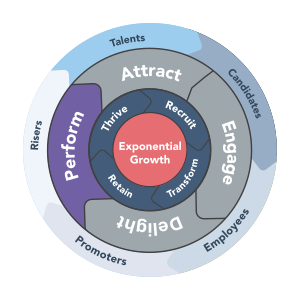
PERFORM
Flywheel
Mid- and Senior-Level Managers, Team Leaders
Target Audience
Min 8 – Max 16
Number of Participants
1 Day
Duration
In-Person – Live Online – E-Learning
Delivery Format
TR / EN
Language Options
Everything DiSC® Management Profile
Pre-Assessment
Customization
Optional
Everything DiSC® Management Profile
Assessment Tool / Inventory
Training Kit
Available
Gamification
Available
Certificate
Not Available
Awards
Available
Available (Catalyst™ Platform — Continuous Access)
Additional Resources
Post-Training Reinforcement
Optional
ROI Measurement
Optional
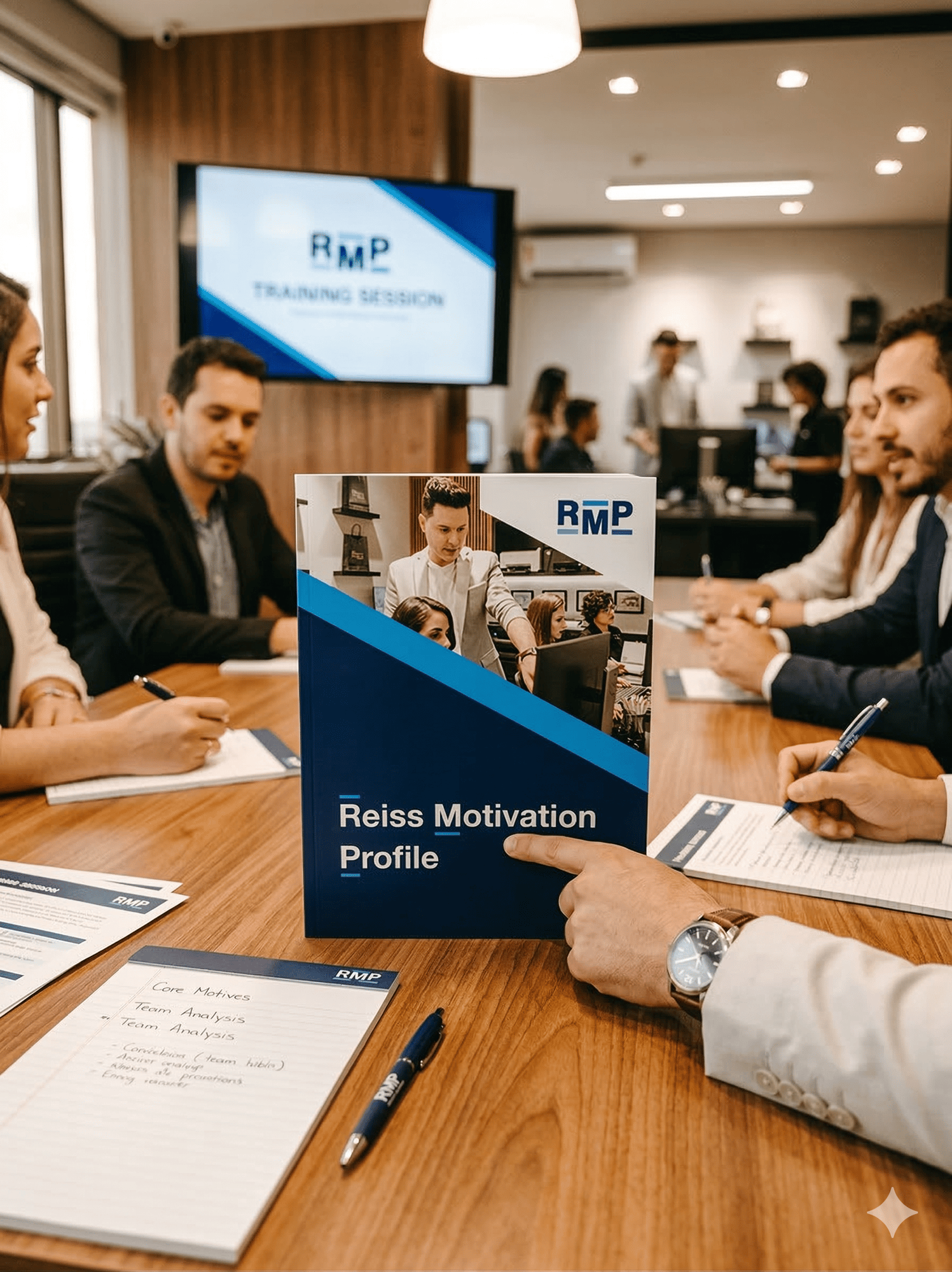
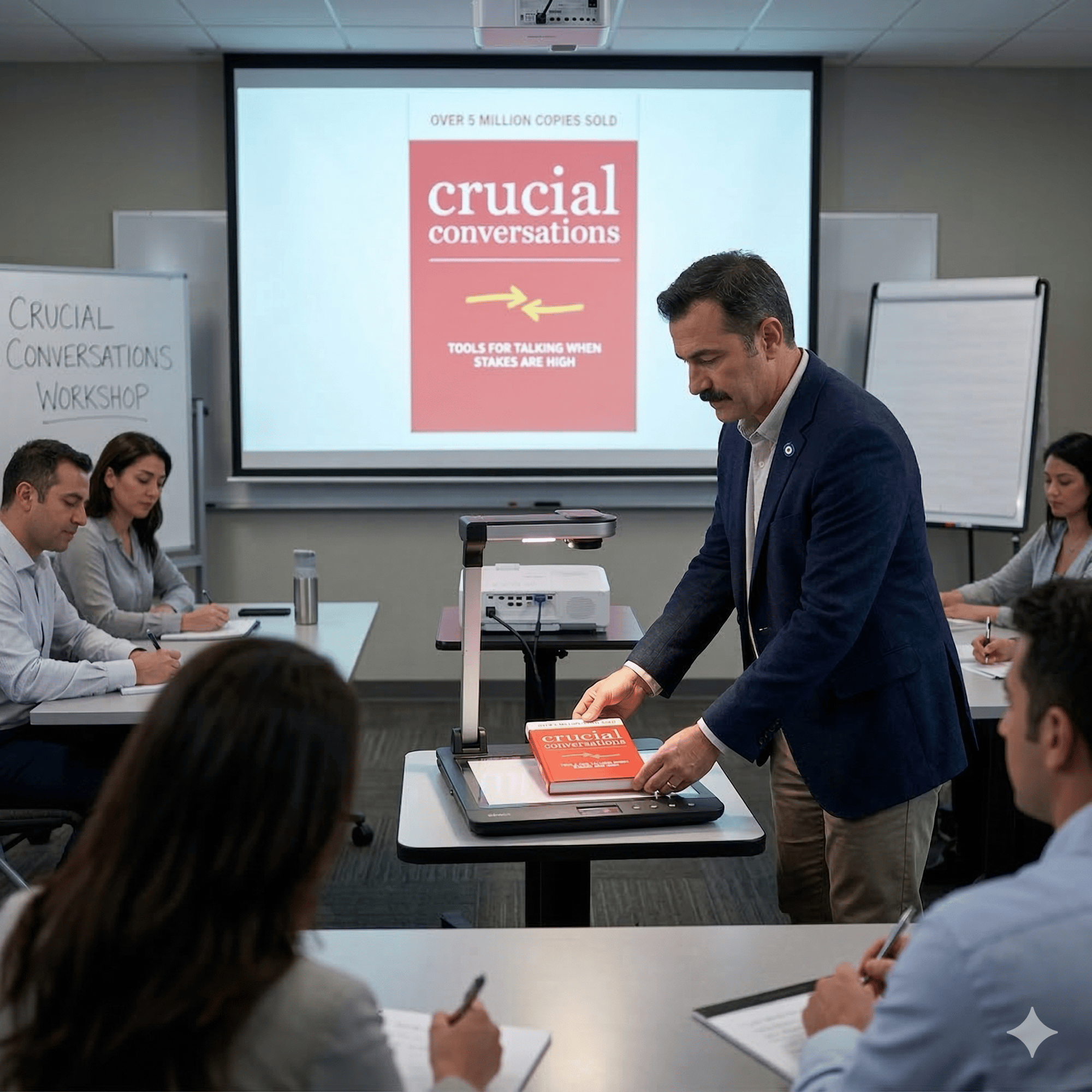
RMP Team Motivation Training — Crucial Conversations®
Follow-Up Programs